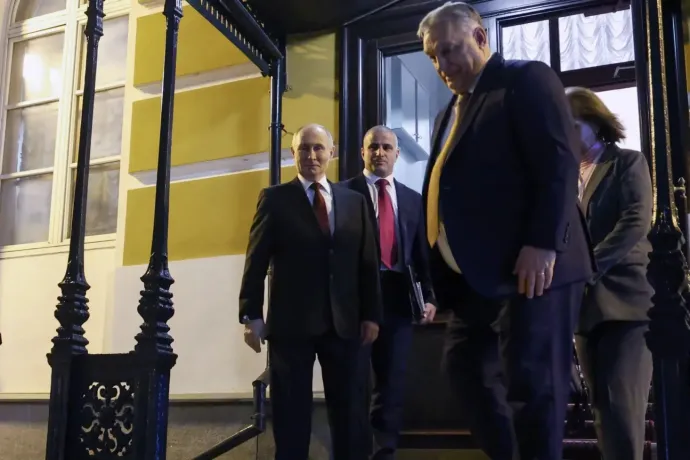


In terms of Russian-Hungarian relations, Viktor Orbán has clearly put all his eggs in one basket – which is now becoming less and less optional and increasingly a constraint for him, Péter Buda, national security expert said in an interview with Telex. According to Buda, it is a well-established influencing technique of the Russian secret service to feign ideological alignment, thus building the other party's trust, while at the same time drawing them into a web of gray-area business opportunities that allow for abundant, and in many cases uncontrolled enrichment for the other side. This is what the Russians did with Hungary after 2010, and now they are trying to do the same with the United States. An interview.
Neither Energy Minister Csaba Lantos nor Mol were represented in the Hungarian delegation that visited Putin. Nevertheless, the government communicated that they had traveled to Moscow to secure Russian energy supplies for Hungary. How credible is this?
Even with the initial justification for the meeting, there could be no doubt that the question of Hungarian energy supplies was merely a cover story. If that were the case, the meeting would not have been organized in secret, and neither would it have been necessary for such high-ranking political leaders—the heads of government and foreign ministers, for example—to meet so often. We have since then, of course, learned that this was not the purpose of the trip.
The Russian Deputy Prime Minister was the first to drop a hint that, in order to avoid the US sanctions, they were working on securing the partial buyout of Russian energy companies in the Balkans that had been hit by Western sanctions. Then, on Saturday, Viktor Orbán also referred to Hungary's role in this, adding that the meeting also included discussions on US-Russian negotiations, which he said "it would be premature to talk about." Regardless of Orbán's comment, I definitely consider the real significance of the Russian-Hungarian meeting to be related to the latter issue, namely the coordination of Hungary's role in it.
On a practical level, could meetings such as this one be necessary so that certain matters can be discussed in person rather than via telecommunications devices, which can be tapped?
This factor also plays a role, but even more so does the different dynamic of in person negotiations as opposed to speaking on the phone. The relevance of this is especially important when it comes to the reshaping of plans or the mutual exploration of intentions and potential for a new phase.
Why would a redrawing be necessary?
Because the fate of the 28-point proposal prepared as part of the so-called peace negotiations seems to be stalled, on the one hand, by European—and, of course, Ukrainian—resistance to it, but it has also caused enormous outrage among the American elite, including some Republicans. Every expert and politician is aware that this is in fact not a peace plan, but is practically a capitulation plan, not only for Ukraine, but for Europe as a whole.
The fact that the Hungarian Prime Minister's visit to Moscow took place right before the arrival of President Trump's special envoy to Moscow and the Ukrainian negotiating delegation's visit to the US in the coming days is also significant.
The corruption crisis in Ukraine also created a new situation, making Kyiv extremely vulnerable to Russian attempts at destabilization and disintegration, as well as to pressure from the US.
Meanwhile, Hungarian peace mediation efforts have consistently and visibly sought to divide and obstruct European cooperation and exert influence on the US in line with Russian war objectives.
The most recent example of this is that Viktor Orbán immediately demanded that Europe unconditionally accept the aforementioned 28-point peace proposal, even though shortly afterwards, President Trump himself said that it was not the final version, and in recent days it has also become evident that its main points were drafted in Moscow. In the current situation, therefore, consultation between Moscow and Budapest was necessary in order for the Hungarian Prime Minister to optimize the effectiveness of his diplomatic activities in this changed context.
Russia has openly supported Viktor Orbán and the current ruling parties in the election campaign. Could this meeting have also served the purpose of allowing the leaders of the two countries to discuss this type of support or the manner in which it is provided?
I believe that this support is also an integral part of the aforementioned grand strategy, the implementation of which now required a kind of extraordinary restructuring. Whether practical coordination took place is anyone's guess, but it is certain that this aspect of bilateral relations is part of the strategic agreement and harmonizing it was the main goal of these negotiations. In other words, if the Hungarian Prime Minister does what is expected of him by Moscow, he can be sure that he will receive all possible support from Moscow in relation to domestic politics. And vice versa.
Before the visit, Viktor Orbán also said that, in addition to discussing energy supplies, he would also talk about the Ukrainian peace process with Putin. Although the current visit may project Orbán in the role of a peace facilitator, which could be positive for him, it could also reinforce his image as a pro-Russian leader, which could hurt him in the election campaign. Who benefits more from this visit in the current situation, Putin or Orbán? Which of them stand to gain more from it?
The Hungarian Prime Minister has long wanted to play on the big international stage; one could say that domestic political success is only important for him insofar as it secures the political status necessary for this. In other words, domestic politics is being subjected to this grand strategy, and not the other way around. How easy it is to slip up while calibrating this strategy is another question, of course, but so far, in the eyes of a certain segment of the Hungarian public, Viktor Orbán has successfully played the role of a pro-peace politician.
This is particularly absurd considering the fact that since 2010, the Hungarian government has been constantly pushing for closer ties with Putin's regime, which eventually ended up starting the war. There is no sugarcoating this: Hungary woke up on Putin's side when Russian aggression against Ukraine began in the early hours of February 24, 2022. And in a rather intimate pose at that; even two weeks before the war started, the Hungarian Prime Minister was still trying to convince Europe that it could find the key to its survival in cooperation with Russian Orthodoxy – which, in practice, is synonymous with Putin's regime. Afterwards, the government had plenty of opportunities to correct itself, but instead, without slowing down, as in the proverbial horse trader's story, who said: "this horse is not blind, just brave!" – it has sought to turn shame into virtue: it started to undermine Western and Ukrainian resistance with peace slogans, accusing them of being pro-war, thereby validating the goals of Russia's misguided military venture.
Therefore, this visit could be of benefit to Orbán in terms of domestic politics if it leads to an outcome which would allow him to temporarily appear in the role of a successful international peace mediator.
Viktor Orbán has clearly put all his eggs in one basket – which is becoming less and less optional and is more and more a constraint for him.
At the same time, I am convinced that any peace agreement that serves the purposes of Russia's war – and the 28 points conceived in Moscow and promoted by Viktor Orbán are just that – will pave the way for a much more brutal conflict in Europe in the future. And it is no longer certain that this can be resolved with just another communication trick.
Is there any significance to the fact that Putin's words were mistranslated by Orbán's interpreter?
In my opinion, the fact that the translation was not accurate during this part of the meeting which was open to the press is not significant in itself. The things which are said here are a kind of mandatory element, the purpose being to give the press something about the objectives of the meeting while concealing the real goals of the negotiating parties. Putin's interpreter, who speaks excellent Hungarian, eagerly noted down what was said, and Putin's words were also recorded.
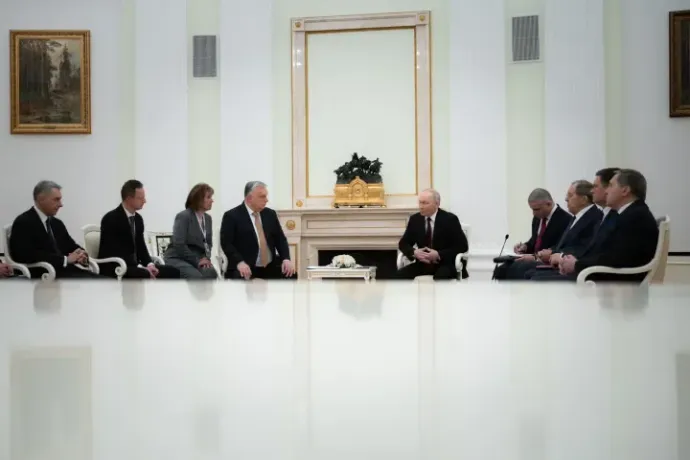
There could obviously be no reason for deliberate mistranslation in such a situation, as everything will reach both the parties concerned and the public, albeit with a slight delay. It was simply a catastrophically bad translation, the most likely reason for which is that the interpreter was for some reason unable to hear Putin properly, as I would rule out the possibility that she does not speak Russian at this level. This is, of course, a serious problem in any case, especially if it also happened during the closed-door negotiations. I do not want to make light of the incident, but I would like to point out the absurdity of the situation, as in this particular context it really makes a difference whether we are talking about Transcarpathia or the region known as the Foothills of the Alps (in Western Hungary, bordering Austria – TN) as well as whether we are receiving or giving. The incident does have indirect diplomatic significance: to put it mildly, it is not going to strengthen the already fragile confidence in the professionalism of the Hungarian Foreign Ministry, and that is not good for the country.
According to Reuters, the Russians shared a document with senior US officials outlining Moscow's conditions for ending the war in mid-October, after the Trump-Zelensky talks. This document then became the basis for the peace plan, which the Hungarian government immediately backed. What would the acceptance of such a peace plan mean for the United States and for Europe?
In fact, thanks to the work of the Russian investigative portal Insider, it has also come to light that the essential elements of the plan were already formulated by the Russian side at the time when Trump came to power. The peace plan, which is enthusiastically supported by the Hungarian government, is in fact a Russian war plan: it sets out the same goals that Moscow wanted to achieve through war. But this is also evident from the Russian threat that Moscow said it would continue the war to enforce the terms of the plan should Ukraine refuse to accept it.
On the same basis, we might as well call the 150 years of Ottoman rule in Hungary peace, starting with the Peace Battle of Mohács.
Ukraine's sovereignty would be fatally undermined by an agreement limiting the size of its army and prohibiting it from joining a defense alliance of its own choosing, while the territories demanded by Russia are strategically important for the protection of Ukraine's territorial integrity. In other words, with this territory in its possession, Moscow would easily be able to conquer and bring the rest of the country under its influence. Indeed, why else would Putin insist on radically weakening Ukraine's defense capabilities if not for the purpose of further conquest? The fall of Ukraine – be it de facto or de jure – would lead to the fatal destabilization and the disintegration of the European security order. Six hundred thousand square kilometers and strategically important seaports would fall into the hands of a power hostile towards the West, which in itself would mean an earthquake-like shift in the geopolitical balance of power, while overwhelmingly demonstrating the West's impotence in terms of security policy and the demise of the international order based on state sovereignty.
Against the backdrop of other changes destabilizing the international order—such as the threat of a tripolar nuclear order, the delegitimization of institutions of international cooperation and governance, and the risk of renewed regional conflicts—all this is paving the way for chaos. It would be in the United States' own well-understood interest to preserve this order – naturally through the adaptations necessitated by the challenges of the current times – but there are clearly not enough people in Washington who recognize that the way out of the current global crisis lies not in dismantling the order, but in increasing and strengthening its sophistication.
Reuters published the information that the Russians had inspired the peace plan a day after a telephone conversation obtained by Bloomberg had put Steve Witkoff in an awkward position. According to the transcript of the recording, in mid-October, the US president's special envoy was giving tips to a high-ranking Kremlin diplomat about how to have Trump accept a peace plan that was unilaterally favorable to Russia. The American peace plan, which up to now has been referred to as the 28-point plan, actually consists of only 19 points, and several parts of it have undergone substantial changes, mostly in favor of the Ukrainians. It would appear that some kind of internal conflict has broken out within the American administration regarding the shaping of American-Russian relations. What could be the outcome of this?
There is clearly a deepening divide in Washington on this issue. This is precisely for the reasons mentioned above: there are those, albeit not many, who understand exactly where the acceptance of this plan would lead in terms of the future of the international order and in relation to this, for the United States specifically. For example, President Trump and his personal envoy are clearly only able to interpret global political processes from the perspective of personal business, ignoring, for example, their geopolitical and historical aspects, not to mention the total lack of a systemic approach.
I cannot predict the future of this division, and can only say that sooner or later the United States will be forced to face the fact that with this policy, it is sawing off the branch it is sitting on. The question is how big a cataclysm it will take for it to realize this, and whether such a cataclysm will result in some kind of overreach, which, based on historical experience, powers on the brink of an existential crisis tend to resort to in order to strengthen their legitimacy.
In your blog, you discuss at length how Moscow uses ideology and business to draw countries into its orbit, as it did with Hungary after 2010. Now it is trying to do the same with the United States. How will we know if Washington has been successfully roped in, and what signs might indicate that this Russian operation has failed?
Yes, I most recently wrote about this a week ago, noting that the role of Kirill Dmitriev, President Putin's special envoy in the US-Russian negotiations is very telling. Dmitriev, who also has excellent intelligence connections, is a very powerful representative of Moscow's ideological influence tool: he presents Moscow as the defender of Christian-conservative values and emphasizes that this is the ideology that connects Russia and the US. At the same time, the Insider article mentioned above reported just a few days ago that, according to reliable Russian sources, Moscow has been promoting the idea of a Russian-American "new Christian coalition" in Washington for some time. This is exactly what I wrote about in the spring in my articles on the Christian-Nationalist Change of the World Order and the Change and International Transformation of Civilizations. So this deceptive ideological thread—the "black international"—is part of an influencing operation aimed at winning over the conservative-minded segment of Western public opinion and political circles.
It is important to note that Hungary is playing a key role exactly in this influencing operation.
However, in addition to this – and Dmitriev is again a perfect example of this – the gray-area dealings that can be used to bribe Western decision-makers on the one hand and blackmail them on the other are also of crucial importance. Dmitriev is the head of an organization operating under the cover name of the Russian Direct Investment Fund, which has been on the US sanctions list since the war broke out because, according to a decision by the US Treasury Department, it is in fact President Putin's slush fund, which is seen as a symbol of Russia's general kleptocracy. Putin uses this slush fund to hide his assets, launder money, and achieve geopolitical goals.
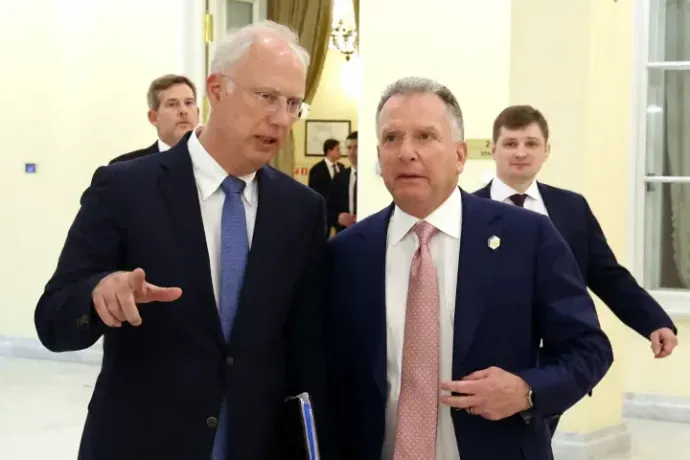
It is a well-established method of Russian secret service influence to feign ideological rapprochement, thus building the other party's trust, while at the same time drawing them into a web of gray-area business opportunities that allow them to become rich, in many cases without any accountability.
These transactions are, of course, thoroughly documented by the Russian side so that the other party can be kept in check and controlled in the future.
This is precisely the model that we have seen introduced in relations between Moscow and the Hungarian Prime Minister since 2010; the Hungarian example is also a clear indication of where this is leading.
Through the operation behind the peace plan, Moscow is trying to throw the same net over Washington, which, once understood, explains exactly what was behind Viktor Orbán's 180-degree turn in his policy toward Russia. A few days after my article on this subject was published, a similar article appeared in the Wall Street Journal entitled "Make Money Not War," which reveals the specific business deals the Russians are using to win over—and then, of course, blackmail—the Americans.
What they often say about this – and we have heard similar sentiments from the Hungarian government – is that it is just business, with no ideological alliance behind it.
But let me ask you this: if it were just business, why would Moscow tie it to the conditions set out in the 28-point plan, namely the weakening of Ukraine's defense capabilities, which also means destabilizing Europe's security? The same is true for Hungary: if this were just business, why did the Hungarian Prime Minister have to become an obvious servant of Russian foreign policy interests in recent years, including the removal of Russian oligarchs from the EU sanctions list – which cannot be explained by Hungarian interests – and neither can the continuous obstructionist activities that were so in line with Russian interests that Orbán even received praise from the Russian leadership for them?
The proof that this operation was successful will be if the US forces Ukraine and Europe to accept an agreement that serves Russian war interests. There is no other reasonable explanation for that happening other than the success of this operation.
For more quick, accurate and impartial news from and about Hungary, subscribe to the Telex English newsletter!