Prosecutor’s office suddenly eager to investigate suspicious cases in Hungary, which speaks volumes about fallen regime
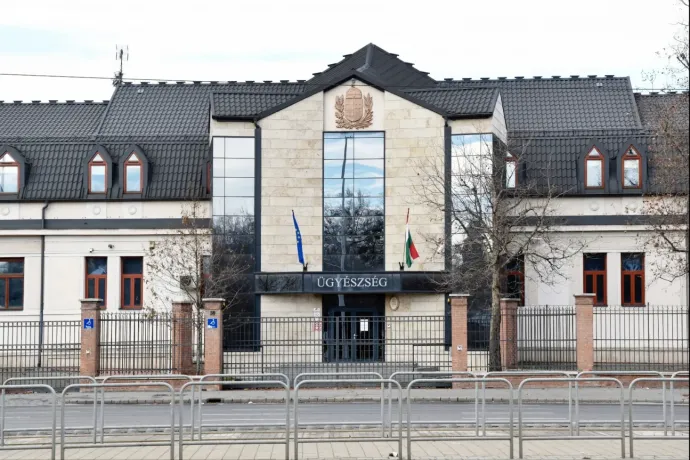


Within days of Fidesz’s unprecedented defeat on April 12 and the Tisza Party’s two-thirds victory, the prosecutor’s office took action in two criminal cases which had previously barely progressed at all. The Central Investigative Prosecutor’s Office announced that they had taken over the case involving the foundations of the Hungarian Central Bank (MNB)—an investigation previously conducted by the National Bureau of Investigation, and on Wednesday, two individuals were taken into custody on suspicion of involvement in a case tied to Viktor Orbán’s younger brother, Áron Orbán. Additionally, the mayor of Halásztelek, was taken into custody on charges of having arranged a bogus position for his 70-year-old mother within Fidesz’s parliamentary faction; and the prosecutor’s office has also begun investigating the Chad mission, as well as the allegations made by former law enforcement officer Bence Szabó.
Given the political climate in the country, immediately following Tisza's two-thirds victory on April 12 many in legal circles were betting that even before the new government was formed, the prosecutor's office would spring into action and suddenly start pursuing cases that the authorities had previously ignored. There is no doubt that this is what we are currently witnessing. And if this is indeed the case, it only reinforces the suspicion that under the previous government, the authorities did not and could not take certain investigative steps for political reasons, and are now making up for lost time.
They’ve released the brakes
It’s worth comparing the two specific cases: one of them is related to the suspicion of malfeasance and is connected to the Central Bank (the MNB case) and the other one involves Áron Orbán. The case concerning the MNB has been known for years; the State Audit Office (ÁSZ) and the independent press have thoroughly investigated it. Despite this, no one has yet been charged in the proceedings, and no one has even been questioned in relation to its portion having to do with the University in Kecskemét. This is so despite the fact that the National Bureau of Investigation ordered a probe into it more than a year ago, on February 10, 2025, following a complaint filed by the State Audit Office.
A similarly sluggish pace has been seen in the case involving associates of Viktor Orbán’s brother. Investigators have long known exactly who the perpetrators are and had the evidence necessary for an indictment, including witness statements; yet it was only now, after the election results proved devastating for Fidesz, that they conducted any substantive investigative work.
There are two mutually reinforcing explanations for why the prosecutor’s office suddenly became so active. One is that following Tisza’s landslide victory, Chief Prosecutor Gábor Bálint Nagy simply went into damage control mode and was forced to take steps he had not previously intended to take, so he could salvage what little he still could. This explanation is supported by the fact that Péter Magyar paid a visit to Gábor Bálint Nagy on March 2, ahead of the election, and asked him, among other things, about the MNB case. Not surprisingly, the meeting between Nagy and Magyar ended without results at the time.
What is even more interesting is that, at that time, the Chief Prosecutor did not yet consider it necessary for the Central Investigative Prosecutor’s Office to take over the MNB case from the police. After just a month, however, Gábor Nagy changed his position, which is difficult to interpret as anything other than a reaction to the election results. If this current proactivity is indeed motivated by damage control, then Gábor Bálint Nagy may be disappointed, because Péter Magyar's message to him was: “This move is too little, too late.”
An equally plausible explanation for the current activity of the prosecutor’s office could be that it would not look good if, after a change in government, it turned out that the authorities had failed to take meaningful investigative steps despite being in possession of sufficient evidence. This is particularly relevant in the case involving Áron Orbán’s associates, where the prosecutor’s office had long been aware of what had happened, and yet failed to conduct house searches or take anyone into custody.
It also doesn’t look good that it has only now been announced that the Central Investigative Prosecutor’s Office had closed the investigation into Péter Magyar for insider trading two weeks before the election. This was a major weapon which the pro-Fidesz propaganda media used to attack the Tisza Party chairman during the campaign, yet for some reason they did not deem it important at the time to announce that they found no evidence of crime.
The press has tried to keep track of the MNB case and the investigation involving Áron Orbán and his associates, but there are probably cases that the public is unaware of, even though political figures may be involved. Nobody would be surprised if, after April 12, substantive steps were taken in the coming days in relation to such cases—whether at the police, the prosecutor’s office, or the National Tax and Customs Administration (NAV)—that have been “on hold” until now. If for no other reason, then because there is a good chance that the new government will replace the leaders of these organizations, and as is usually the case in such situations, many people will want to reposition themselves within the organization during the interim period, perhaps to score points with the next leaders.
Panic in NER’s orbit
The accountability promised by the Tisza Party is likely to be aimed primarily at Fidesz politicians, NER’s economic orbit, and circles connected to them in one way or another. This group remained relatively calm right up until the elections, because even though they may have anticipated a Fidesz defeat, few could have imagined a two-thirds victory for the opposition. The majority believed that even if Tisza won, there would be a few lean years ahead, but they would have no reason to fear for their livelihoods.
NER is short for Nemzeti Együttműködés Rendszere, meaning ’System of National Cooperation.’ The term was coined by the Orbán government after their election victory in 2010 to refer to the changes in government that they were about to introduce. By now, NER has become a word in its own right, and is used in colloquial Hungarian to refer to Fidesz' governing elite, complete with the politicians and the oligarchs profiting from the system.
However, Tisza’s two-thirds victory changed everything. According to Telex’s information, panic erupted in this “business” world within a day or two after the election, and those who felt they had something to fear started flocking to their lawyers one after another. Some are seeking out lawyers in the hope that through them they will be able to negotiate with the new elite. Péter Magyar also sent a message to them on Thursday, quoting Viktor Orbán: “Nothing will be forgotten, everything has been recorded, everything will be settled.”
Although there are some within these NER circles who are trying to reassure themselves by saying that there has been no accountability during previous major transitions, the current situation is politically different from, for example, the circumstances of 1998, 2002, or 2010.
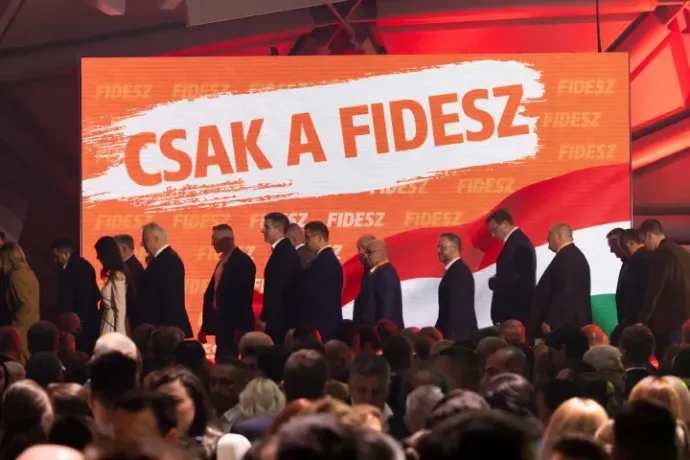
The political and economic elite that emerged after the transition to democracy had, in fact, become so closely knit by the 1990s that the changes in government during that period did not disrupt the politically and economically intertwined ecosystem, and the same was true of the 2010 transition. This is when backroom deals were in full swing; oligarchs linked to the Socialist Party fell in line, and in return, most of them were left alone—indeed, some of them even managed to thrive within NER.
Although his "insider status" gave Péter Magyar an advantage in opposition circles when he entered the political scene, the future prime minister was not part of the NER’s classic economic inner circle, so he has no obligations to them, while his political future is heavily dependent on the success of the accountability process. This is why many expect that the National Asset Recovery and Protection Office, which is to be established, will likely be granted the strongest possible powers, and backroom deals will not be an option.
Up to now, it wasn't ability that was lacking, but political will
It is not yet clear whether this office will operate independently or it will be integrated into an existing institution. What is certain, however, is that if there is political will and investigators are allowed to work independently, there are already bodies in place that are in theory capable of uncovering complex economic cases. Examples include the National Tax and Customs Administration (NAV) and the Central Investigative Prosecutor’s Office, where many investigators are reportedly eager to get to work and investigate those who they previously had to leave alone for political reasons.
It is telling that for a long time, it was the police who conducted the investigation into the MNB’s foundations, even though it was well known in professional circles that the Central Investigative Prosecutor’s Office—not the National Bureau of Investigation—is the most competent one when it comes to investigating complex, wide-ranging economic crimes that also involve the political elite.
The latter, if it so chooses, knows how to produce results—even in collaboration with the police—and can do so quite spectacularly. In 2011, the KNYF played a leading role in uncovering the so-called match-fixing scandal, but the investigation into the ties between László Vizoviczki and corrupt police officials could also be mentioned. And precisely because of the capabilities within the KNYF, it is difficult to explain why the investigating prosecutors have so far been unable to produce any results in the case involving Áron Orbán.
The first ones to talk may come out ahead
It is hard to tell at this point how members of NER’s inner circle will react if either the newly established office or existing agencies begin investigating cases suspected of corruption and identify the first suspects, but the behavior patterns seen in organized crime circles will likely emerge: the small players will try to save their own necks, so they will start talking and point their fingers upwards. This is foreshadowed by the BBC's information, according to which ministry employees armed with documents copied onto USB flash drives, have already shown up around the Tisza Party begging for impunity in exchange.
In the 1990s and 2000s, law enforcement was still at a disadvantage compared to criminals, but now there are legal institutions that investigators can use very skillfully. One such example is what is colloquially known as a plea bargain, although this is not the same as the plea bargain in American law.
While in an American-style plea bargain, the subject of the charges—including the legal classification of the crime—can be negotiated, under Hungarian law, the facts of the case and the classification cannot be the subject of a negotiation. The essence of the Hungarian plea agreement is that the defendant admits guilt and makes a full confession; in exchange, the prosecutor’s office and the defendant make an advance agreement on the extent or nature of the punishment, which may thus be more favorable than a sentence delivered at the end of a lengthy court trial.
The purpose of this institution is to significantly speed up and simplify criminal proceedings; however, it also places a serious responsibility on the defense attorney, who is required to participate in the plea bargaining process. During the plea bargain, the suspect not only provides evidence against themselves, but often against their accomplices as well, which comes with serious risks: although the confession cannot be directly used as evidence if the plea agreement ultimately fails to materialize, the investigation may still continue based on information obtained by the authorities (such as the location of hidden items or assets). The court’s approval is always required for the agreement to be finalized, which involves the judge verifying the voluntary nature of the confession and the legality of the agreement.
Within NER’s economic sphere of influence, the number of front men per square meter is fairly high, so it is reasonable to expect that during investigations they will seek to strike a deal with the authorities.
However, there are some doubts in relation to plea bargains. It cannot be ruled out that a plea bargain might tempt the defendant to make a false confession, thereby implicating innocent people in the case while protecting themselves. Furthermore, the authorities may even use it for blackmail, for example by telling the defendant: “If you don’t testify against your boss, you’ll spend years behind bars.” Moreover, in the case of a plea bargain, the main defendant is able to see from the indictment exactly who testified against them in order to protect themselves. This is true even when the institution of the protected witness is available, because the content of the testimony given by a protected witness reveals a great deal about the witness themselves.
Some may try to capitalize on the panic within NER
And of course, it is also possible to expect that the accountability campaign will give rise to new crimes. In the gray areas of business, certain lawyers or fixers have long offered their services—in exchange for hefty fees—to people against whom some authority was conducting criminal proceedings.
It also was not uncommon for people to pay for these “services” only to be left high and dry upon discovering that they had been swindled. In the gray zone of the economic sector, there are many wheeler-dealers trying to make money this way, and with a whole wave of accountability on the horizon, there will likely be even more of those who will rip off—or try to rip off—troubled members of NER by citing various connections.
The calling to account (or whatever we choose to call it) is likely to provide political capital for Tisza even if, in the long run, it does not prove to be particularly successful. These proceedings, after all, have multiple phases, and the first is often the most spectacular—when investigators take people away in handcuffs, and then take them before the judge who decides on their arrest, still in handcuffs.
Such news and images make a splash among the public even when the ultimate outcome of the proceedings is uncertain. And given the nature of the Hungarian justice system, these proceedings are likely to drag on for years before each case is finally resolved.
For more quick, accurate and impartial news from and about Hungary, subscribe to the Telex English newsletter!