Moving on from the sins of the Orbán regime too quickly would serve the interests of the perpetrators – Péter Krekó



Even two months after the government change, Hungarian society remains uncertain about how it should come to terms with the past sixteen years. Some believe that a thorough legal and moral reckoning is necessary for a clean break, while others think there has been enough tension and that it is time to focus on the future rather than the grievances of the past. We spoke with social psychologist Péter Krekó—who was himself personally affected by the Orbán regime’s smear campaigns—about
- why we should avoid singling out only Antal Rogán and a few leaders at public television as guilty for the past sixteen years;
- why moving on quickly after the events of recent years actually serves the interests of the perpetrators;
- why those who participated in operating the Orbán regime cannot use the excuse of “I was just following orders”;
- and why it is worth reflecting, even on an individual level, on the specific instances when we may have unnecessarily yielded to those in power in the past.
All research indicates that there is an overwhelming public demand for a reckoning and the recovery of assets, particularly with regard to corruption cases. This is not only in the country’s pragmatic interest but is also important in terms of a moral cleansing, and there is a strong democratic mandate for it. Of course, this does not make the process any easier from a legal standpoint. In such cases of calling to account, it will not be the government’s communications office or the Prime Minister’s Office that has the final say, but rather law enforcement agencies and the judiciary. Under the current leadership, the Prosecutor’s Office and the Supreme Court will not be allies of the government during this process.
On the other hand, it is also clear that there is a demand for accountability with regard to political abuses such as incitement to hatred. Indeed, after Hungary's transition to democracy (in 1989) there was a serious lack of accountability—think, for example, of the domestic intelligence files from the communist era—and now, there is a strong and legitimate expectation in society that this would not happen again this time around. The idea that “we should stop the witch hunt” because it leads to social peace sounds lofty indeed.
But in the wake of an era of systemic violations of legal and political norms, this would mean the elite and society as a whole turning a blind eye to these crimes.
I would approach this with caution, as individual political traumas cannot be directly extrapolated to the societal level. At the same time, it is true that half the country is currently traumatized in some sense, and trauma does not disappear simply because we are not talking about it. This is why it is particularly important not to gloss over responsibility in the name of the empty rhetoric of reconciliation.
In this kind of situation, moving on too quickly serves the interests of the perpetrators.
Coming to terms with trauma is, by its very nature, a loud, conflict-ridden, and painful process, in which suffering is not an end in itself but rather serves the purpose of ensuring that none of this ever happens again.
Meanwhile, a new phenomenon has emerged: more and more former servants of the system have been coming forward and offering justification for their actions. It is, of course, important—especially in terms of understanding—to hear the perspective of the “perpetrators,” but I believe we have not yet heard enough about the perspective of the “victims.” We need to set a reasonable limit on the extent to which media platforms become public confessionals. It would not be desirable for the perpetrators’ self-justifying narratives to dominate the public discourse—even if it is often more exciting to listen to their explanations. It is worth keeping in mind that perpetrators address the public with the goal of seeking absolution from society.
This is a very complex issue, and I won’t be able to address every aspect of it. I think there’s no question that former senior officials should be given a platform to speak—while, of course, being held accountable for their past decisions. I think it’s more problematic when employees of the Orbán regime’s propaganda machine—such as former staff of the public broadcaster—present their own narrative with relatively little critical scrutiny. This can create the impression that the actions of those speaking out are portrayed as overly human, even though they were in fact deeply amoral. There is a well-known phenomenon described in cognitive psychology as "What You See Is All There Is" (WYSIATI). This means that we only focus on whatever is right in front of us, and as soon as it disappears, it loses its relevance. By now, the propaganda has largely disappeared; we no longer see the giant billboards, the tone of the public media has changed, Origo’s audience has dropped by half, Megafon has gone quiet, and Mediaworks has begun downsizing. Instead, friendly-looking, teary-eyed people are publicly expressing their regret for what they’ve done.
All of this seems to point toward granting forgiveness very quickly, although I believe it is not justifiable in the case of those who played an active role in inciting anger and stirring up hatred.
It would be worth avoiding placing all the blame solely on the upper echelons and singling out only Antal Rogán and a few executives of the public broadcaster as the culprits. In my opinion, we need to speak openly about the acts committed, their gravity, and their consequences—not only at the level of the political leadership, but also involving the mid-level or even lower-level operators of the propaganda machine.
I have argued in several articles that the Orbán regime was a kind of information autocracy, meaning that it was able to retain its power through systematically manipulating information. It is also important from the standpoint of moral clarity to fully understand that the Orbán regime was not a classic authoritarian regime:
no one was forced to participate in inciting hatred, and no one had a gun held to their head to make them serve the propaganda.
The regime did have tools of coercion, or course, but those who fell victim to them were not primarily from the middle class. That is why the excuse that many invoked after the fall of the Third Reich—“I was just following orders”—cannot serve as justification here. It was possible to stand up and walk away from practically any part of the state apparatus—including the propaganda institutions. And to be honest, very few actually did so over the past 16 years.
The two most important emotions that led to the change in government were anger and hope. Anger toward the previous government was one of the most important catalysts of change. Of course, this anger must not be allowed to run rampant, but the expression of public moral outrage is a legitimate democratic tool. When the Prime Minister or members of his government speak out strongly against Fidesz politicians, it may go against many people’s sensibilities, but it partly reflects and satisfies this widespread demand. Of course, it is important that the current government not do the same as its predecessor, but the departure from the previous approach is evident: inciting hatred through public billboards is now prohibited by law, and the government has at least apologized for publishing a message with the same blue background (which was previously used by Fidesz) and for using anti-migrant rhetoric-both of which were reminiscent of Fidesz's style of communication.
When the “Uncle Zsolti case” was unfolding, we published an article on Telex in which we discussed the nature of tribal logic prevalent in Hungarian political thinking. In essence, this means that universal political norms are transformed into particular political norms. So while someone might consider a violation of a norm to be forgivable—or even desirable—on their own side, they are far less lenient toward those on the other side. This danger is present even after the elections, albeit somewhat differently than before. After all, polarization requires two sides, and one side is currently in the process of disintegrating, which in itself carries the potential for abuse of power: kicking an opponent while they’re down—which, of course, is not the same as holding them legally accountable. The ruling party has actually made a few political gestures that run counter to this tribal logic; for example, they refused to suspend Máté Kocsis’s parliamentary immunity, and there is a clear effort to prevent the abuse of power by introducing institutional safeguards—one such measure being the eight-year limit on the prime minister’s terms of office. Which is another reason why I find the fear that a self-serving witch hunt is underway to be exaggerated.
The process of reflection has not begun at all. Apart from one or two critical voices, there has been no substantive reflection on Fidesz’s part; Viktor Orbán continues to attribute his defeat to a global conspiracy. What we have seen instead are a few significant gestures made by the ruling party, which has repeatedly spoken of the victims of smear campaigns and those who have been economically exploited. It was a very significant gesture when Péter Magyar apologized for the sins of the Fidesz system—sins for which he is not directly responsible, even though he was once in some way part of the system—but he offered this apology on behalf of the state nonetheless. Fidesz has not yet arrived at this point, and it seems that their political strategy is the exact opposite of this. The message of Orbán’s “essay” is that they were heading in the right direction, they just didn’t go far enough. As long as Viktor Orbán remains in charge of Fidesz, this is what we can expect.
Even though apologising is not an unfamiliar element of political crisis management: it can be done through tactical communication methods as well.
I think that the drastic decline in Fidesz's popularity is a clear indication that they aren’t even meeting the bare minimum in this regard. In a sense, Viktor Orbán has now become a prisoner of his own political style.
That's a good question. This kind of attitude is indeed completely out of character for Viktor Orbán; he has typically followed the approach of “let’s push it as far as we can.” This was also the logic of the campaign: the cure for the declining popularity of Fidesz and Orbán was having even more Orbán. It was a rather absurd but telling moment when, in his first post-election interview, he cited the failure to sufficiently speed up the construction of Paks II as his government’s only mistake. In other words, Hungary needed more—not less—Russian influence. Orbán used to have a keen understanding of public sentiment and its shifts, which is why he was able to serve as prime minister for twenty years. Now, however, he seems to have become completely oblivious to even the most dramatic shifts in public opinion—which is the ultimate failure of populism. In my opinion, this is part of the reason why Fidesz’s support has plummeted so sharply since the election: there has been no meaningful self-reflection, neither with regard to the past, nor with regard to the present.
Nobody has apologized, but personally, I don't expect them to. I'm not surprised that Viktor Orbán, Zsolt Bayer, or even Tamás Menczer haven't called to apologize yet. They have their own problems these days. But I’m not the important part of this story. Prime Minister Péter Magyar’s apology was important, but I agree with Dániel Hegedűs that the state could have offered an apology—by name—to the people and organizations that were dragged through the mud by the Sovereignty Protection Office. Not for my sake—I received enough solidarity at the time. Over the course of sixteen years, there have been completely unfounded hate campaigns launched against hundreds of people—not only public figures, but private citizens too, who are not accustomed to such political attacks. Anyone who has gone through something like this has surely been deeply affected by it.
I would find it reasonable, for example, to introduce a specific regulation preventing those who participated in certain tasks at public media outlets and other media organizations that were at the forefront of inciting hatred from working in public administration or the public sphere for a certain period of time. I obviously don’t think that everyone who was in a leadership position and was affiliated with the state was necessarily working for Fidesz. In some sectors, however, it is easier to draw such moral boundaries, and I believe the media is definitely one of them.
Anyone who actively participated in conducting information warfare against the citizens of this country and who used these informational weapons against civilians should have to face consequences.
Of course, there are complex issues here that go far beyond moral considerations. How can the administrative apparatus be replaced without this leading to the instant paralysis of the state? Removing all department heads at once is hardly possible, because the trains would stop running and the power would go out. In many areas, the government must strike a balance between practical and moral considerations. Furthermore, bureaucracy tends to change only slowly and gradually, and it strives to maintain the status quo and preserve itself. At the same time, it will carry out instructions coming from the new government. Fidesz is currently falling apart, so it will not be able to develop a “deep state.”
It is indeed essential to emphasize this distinction: the Orbán regime was not a democracy, but morally and historically, it cannot be judged in the same way as murderous dictatorships. Accountability and moral reckoning are important, but this distinction must be recognized. That said, we do indeed have a troubled historical legacy in which certain events have remained unaddressed, and false narratives continue to persist to this day—such as the claim that Nazism was brought to Hungary by the Germans, communism by the Soviets, and that anything bad that ever befell the poor Hungarian people came from outside.
Hungarian society made a courageous decision in April and was able to correct the political mistakes of the past. It is important, however, to note that Fidesz was able to deceive Hungarian society for 14–16 years, even though there were already many troubling signs pointing toward an autocratic system as early as their first term.
This is why I believe Hungarians also bore a social responsibility for the system’s continued existence
—even though the system’s propaganda machine deprived society of the very opportunity to make informed decisions. It could be harmful, though, to say that the Hungarian people have now made a wise decision and from this point on, all previous problems are eliminated. Everyone should reflect on the moments in their lives when they may have given in or yielded to this regime—which, in hindsight, turned out to be far less dangerous and collapsed more easily than we had previously assumed it would.
The concept of cognitive dissonance has become a popular subject recently, and indeed, an entire country was in a state of cognitive dissonance for a very long time here. In a candid interview, an employee of the public media recounted how they had on one occasion gone against the editor’s wishes, even though they were certain that as a result they would be fired the next day—and yet they were not. American historian Timothy Snyder often uses the term “anticipatory obedience.” Hungary was in a state of anticipatory obedience. Although I know this isn’t a popular viewpoint, because it’s easier to blame everything on Fidesz’s excessive power.
I believe the lesson is that we should not try to conform to the will of those in power in advance, and we should not be afraid to be critical. Under the Orbán government, we learned that it is possible to question and dispute government decisions, that resistance can have an impact, and that we need not fear those in power. We will continue to need this argumentative, critical attitude in the future as well, because it is essential for helping us move from a subservient mindset towards a more socially conscious civic mindset. Hungarian history is replete with very troubling patterns of submission to authority, so it would be wise to use the current situation to break free from this pattern of thinking. If we dare speak out against those in power, we will be able to live in a more developed, better society.
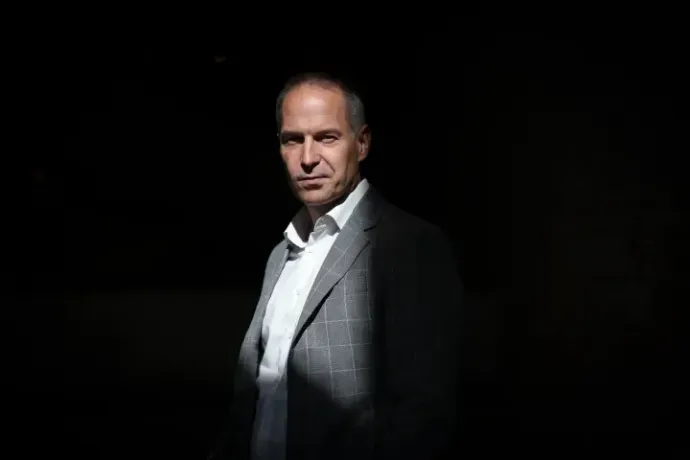
Péter Krekó is a Political and Behavioral Scientist, a Senior Fellow at CEU IAS, Director at Political Capital, Associate Professor at ELTE PPK, Policy Leader Fellow alumnus at European University Institute.
For more quick, accurate and impartial news from and about Hungary, subscribe to the Telex English newsletter!