Hungarian spy ring targeted EU officials, Commission probe concludes


An official investigation has concluded that there indeed used to be a Hungarian spy ring operating out of the country’s permanent mission in Brussels, and the network’s activities intensified in 2015— according to a document seen by Politico.
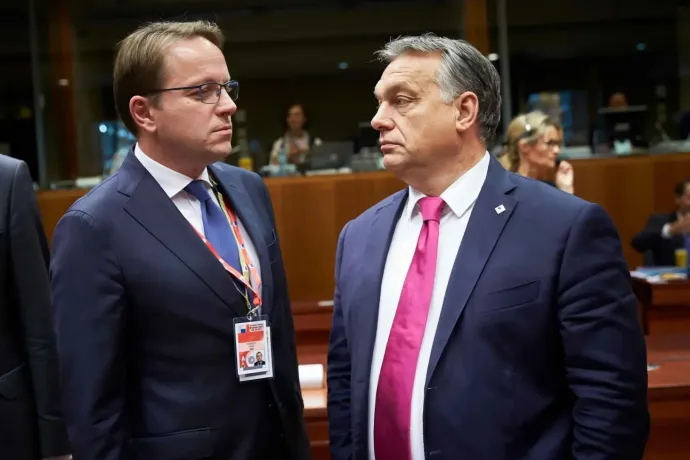
The document, dated April of this year, summarizes the findings of an investigation led by Budget, Anti-Fraud and Public Administration Commissioner Piotr Serafin. Serafin was tasked with investigating the allegations which had been uncovered by Direkt36. According to the Direkt36 article, in the mid-2010's several European Commission employees were approached by intelligence operatives working under diplomatic cover at the Hungarian Permanent Representation to the EU, seeking to influence the drafting of Commission documents. Between 2015 and 2019, the Permanent Representation was headed by Olivér Várhelyi, after which the Hungarian government nominated him as commissioner.
According to the article, the espionage became particularly aggressive during Várhelyi’s tenure as ambassador. Várhelyi later moved from the Permanent Representation to the European Commission. During his time as ambassador, it was János Lázár who oversaw the Information Office, which is responsible for intelligence.
Serafin’s investigation essentially confirmed the main claims outlined by Direkt36. According to these, between 2013 and 2016, Hungarian intelligence services sent several officials to the country’s permanent mission to the EU. “The activities of these intelligence officers were initially discreet, but starting in 2015, they gradually became much more overt,” the document states.
As a result of this intensified activity, the spy network's existence “became known among Hungarian officials working in the EU, which appears to have “hampered the efficacy of their efforts,” the report states. “To the best of our knowledge, these activities ceased in 2016.”
The paper noted that Olivér Várhelyi, who currently serves as European Commissioner for Health and Animal Welfare was appointed as head of the country’s permanent representation to the EU in 2015, where he had been working since 2011.
After the first media reports appeared last year alleging that the embassy had served as a base for a spy ring, Várhelyi told Commission President Ursula von der Leyen that he “had no knowledge” of the alleged Hungarian activities. In January of this year, when EU lawmakers questioned him about the matter, he essentially said the same thing.
According to Politico, Serafin’s investigation was unable to single out any specific individual as responsible. “On the basis of the information gathered during the investigation, and with the limited tools currently available to the Commission, it is not possible to attribute individual responsibility or involvement beyond that of the intelligence officers themselves,” reads the document sent to MEPs, which also states that the Commission is not aware of any “serious” security breaches.
Nevertheless, the report details the findings and, for the first time, officially confirms the existence of the spy ring and its targeting of EU officials.
"The intelligence officers used their official position to fulfil a specific mission that appears to have gone beyond the tasks that are usually associated with those of diplomats in the Permanent Representation,” the document states. Specifically, “this involved approaching Commission officials of Hungarian nationality and attempting to collect detailed information from them regarding work within the Commission on topics of specific interest to the Hungarian government,” the text continues.
The Hungarian Permanent Representation did not respond to Politico’s request for comment.
For more quick, accurate, and impartial news from and about Hungary, subscribe to the Telex English newsletter!