He represented Hungary in the world championship final, but his citizenship was denied, citing national security
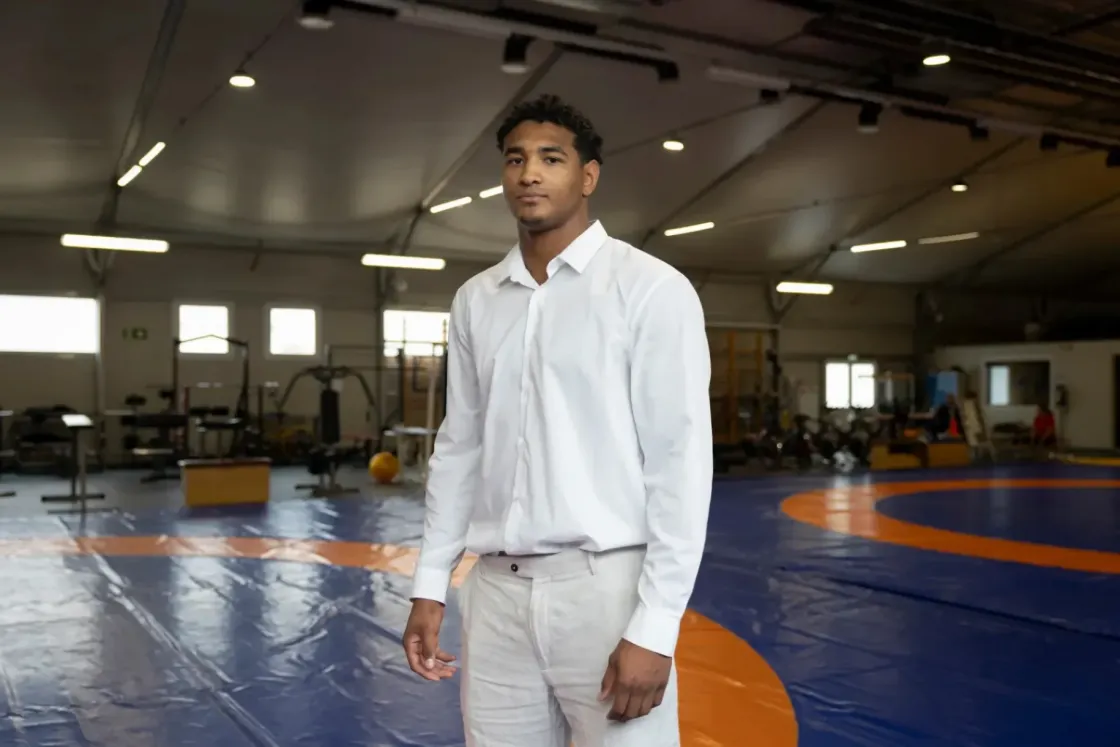

“I competed in the world championship final at age seventeen. When I was twenty, I represented Hungary in the final at the European championship, and now I’m fighting to get a Hungarian passport. Without a passport, I can’t achieve my dream of becoming a Hungarian Olympian and representing my country at the world’s biggest competition.”
— it was with these words that Musza Arsunkaev opened our conversation at the Vasas wrestling gym.
The athlete was born in Budapest in 2005, grew up in the Hungarian capital's 13th district and speaks perfect Hungarian. He attended school here from kindergarten through high school, graduating with his high school diploma just recently. He first stepped into the Vasas gym in 2014 alongside his brother, Ahmad; he played basketball before that, until his father noticed how skillfully and quickly he moved when he and his brother were wrestling in the living room.
Arsunkaev competes in freestyle wrestling and last year he became the Hungarian champion amongst the adults. He is proud of his first major success—reaching the U17 World Championship final—though he was a bit disappointed that he lost. In the semifinals, however, he pulled off a last-minute comeback against an Iranian competitor. He hopes that that particular match reflects his personality as an athlete and his mindset of never giving up, as well as his ability to pull off something unexpected in the final moments, which can have a decisive influence on the outcome.
He is currently preparing for this year’s U23 World Championships, which will be held in Las Vegas in October. He believes that winning the national qualifier in the 97-kilogram weight class will be easier than entering the United States due to the strict requirements. This is because he only has a non-biometric refugee passport, which must be renewed annually in Hungary, and airlines may even ask him not to board the flight in Budapest, as it’s not certain he’ll be allowed to continue his journey during a layover.
“My father, Abdulrasid, was born in Chechnya and grew up near Grozny; today he sells antique jewelry. My mother, Merci, was born in Nigeria and grew up near the capital, Lagos. My mom came to Europe in the early ’90s; her passport had expired, so she couldn’t return home with it and ended up in a refugee camp. She will soon earn her Hungarian high school diploma-she learnt Hungarian fluently, and only has a slight accent. She met my father in the camp; at first, it seemed like theirs would be nothing more than a passing fling, because they both envisioned their lives heading in different directions. Then, just like in a romantic movie, my mother told my father that my older brother was already on his way.”
They got married, and it turned out that they were meant for each other after all. Then, a few years later, I came along—there are six of us siblings in all, my youngest sister is eight. My older brother no longer lives with us, but otherwise we’re a large and close-knit family. When I was little, they asked me whether I wanted to be Russian or Nigerian, because according to Hungarian law I couldn’t be Hungarian, even though I was born here. My parents didn’t want me to be a Russian citizen, so the other option—Nigeria—ended up on the paperwork,” he said.
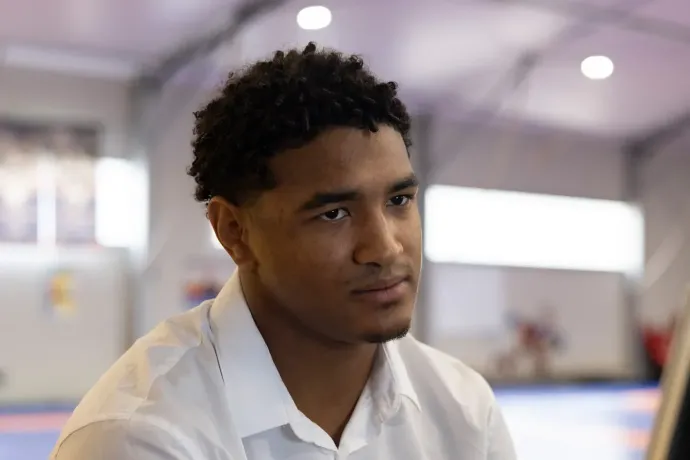
Arsunkaev only faced discrimination at school once because of his skin color, and he stood up for himself. He didn’t leave Hungary until he was 15, and even then it was only because he was talented at wrestling and had to travel to a competition. His explosiveness, speed, and agility became apparent very quickly, and he also had perseverance. In fact, there has only been one week in his career so far when he didn’t want to wrestle. He is the tallest in his family, having inherited this trait from his Nigerian grandfather, who was around 190 centimeters tall; Ahmad is close to that height as well. His father is around 170 centimeters tall, and his siblings mostly inherited his father’s genetics—Ahmad, for example, also wrestles in the 70-kilogram weight class.
Arsunkaev only knows a few sentences in Chechen, and when we met him, he found it important to emphasize that the language is very different from Russian. He speaks about the same amount in his mother’s native language. He only knows his parents’ homelands from pictures, books, and stories; he himself has never been to either country.
He received his sports citizenship right when Vasas took him to his first competition, and soon afterwards made his debut on the junior national team as well. This wasn't difficult to arrange. All that was needed was for the Nigerian Wrestling Federation to give him up—which wasn't difficult at all, since they didn't even know who he was. This allowed him to compete for Hungary without any problems for a long time. He only faced difficulty once, when the bus carrying the wrestlers had to spend hours at the Bulgarian–Serbian border while border guards made phone calls to confirm that he could indeed be allowed to pass with his refugee passport, as the Hungarians were claiming. His passport allows him to move freely within the EU, but wrestling is strongest in the Turkic-speaking countries and the former Soviet republics, which does not make his travels any easier.
Until now, a permanent passport was only required for competing at the Olympics—but not at the World Championships. Starting January 1, 2027, however, United World Wrestling (UWW) is introducing stricter rules: athletes will no longer be able to compete with a residence permit; they must possess the passport of the country they are competing for. The tightening of the rules is understandable; UWW's goal was to eliminate frequent naturalizations, but in doing so, it has also closed the door on athletes with a status similar to Arsunkaev's. The Olympic qualification process for wrestling has also changed; from now on, the world rankings will be taken into account, and points can only be earned at World Cup events—here, too, athletes will only be allowed to compete with a passport.
Arsunkaev is now applying for Hungarian citizenship—and the passport that comes with it—for the third time. His first two applications were flatly rejected. In such cases, the authorities do not provide a reason for the denial, so he was only notified of the rejection.
After the first rejection, Marianna Sastin, his club’s section chair who was the first women’s world champion requested an explanation. In response, the authorities sent her a passage from the law that did not even apply to the wrestler, since Arsunkaev was born in Hungary. They later received information stating that granting him a passport would pose a national security risk.They couldn't help but wonder what a hardworking 20-year-old wrestler could possibly have done to warrant such an assessment.
Sastin still remembers well what it’s like to arrive at the border with a knot in one’s stomach; she belongs to the generation that had to go through that whenever they wanted to leave the country. “Fortunately, Musza hasn’t heard about what it was like in our day; he doesn’t understand that term, and hopefully he never will,” said Sastin.
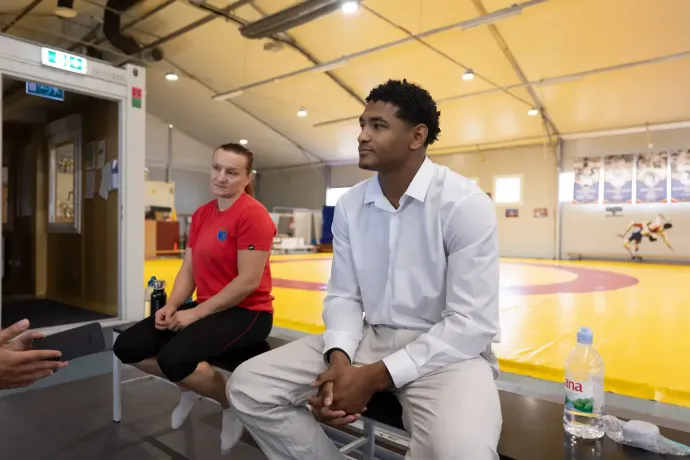
“This is the most devastating form of rejection. To the best of our knowledge, Musza could be a Hungarian citizen; he poses no risk,” Tibor Kacsó, co-chairman and one of the main supporters of the Vasas wrestling team said. In many cases, things are dismissed out of sheer convenience, and suddenly we’re faced with an insurmountable wall. And this isn’t an isolated case; Vasas is not the only club dealing with this. Another club, Spartacus MTK in Pesterzsébet has two boys whose citizenship status is also unresolved, and there’s no progress there either. In the case of the Musza family, it’s clear that the bureaucracy isn’t keeping up with reality, because the two youngest brothers are effectively stateless; they are no longer Nigerian citizens through their mother, unlike their older siblings. In Musza’s case, we believe that this isn't a knot that needs to be untangled, but rather—for lack of a better option— one that should simply be cut through. As such, it could even set a precedent for similar cases; but we would like to see this particular case resolved once and for all.”
János Jákó, a lawyer and member of Vasas's board of directors, is now assisting the athlete in securing a favorable ruling in the third attempt, which is currently underway. The Hungarian federation is also providing every possible assistance; they have previously taken the matter all the way to the State Secretariat for Sports, and are doing so again now. They are also confident that the new government’s approach will be different—and more flexible—than the previous one’s.
According to Sastin, they’re running out of time, because Musza’s progress would already require him to compete against adults. She would be very sorry to lose him as an athlete, but also finds the legal situation–namely, that there are young people living here who consider Hungary their homeland, yet the country does not reciprocate that sentiment-nonsensical from a human perspective. While many people are granted citizenship based on their merits, Arsunkaev is not considered worthy of becoming Hungarian—even though he is Hungarian through and through and has done nothing to disqualify himself from being Hungarian,” said Sastin.
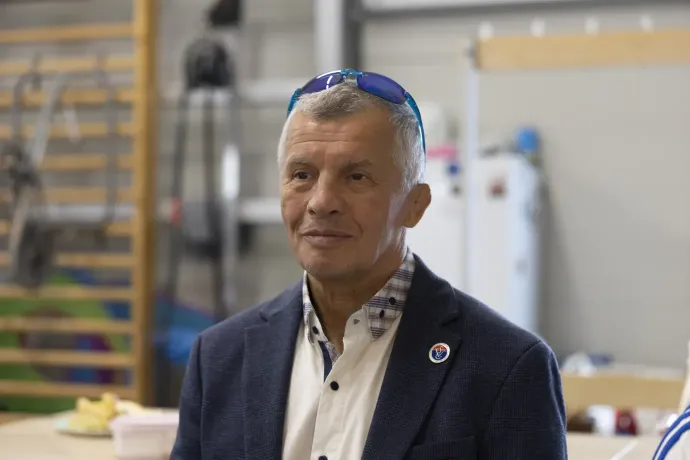
I don’t think about my situation every day, but whenever a competition is approaching, I definitely do. I try to shut out the outside world as much as possible, because that’s the essence of wrestling. Everyone in this sport is strong; everyone has serious muscle—you can’t make it without that. Mental strength is what decides the matches and who the winner will be. If someone is weak in mind and spirit, they won’t be strong on the mat either. Razambek Zhamalov is my favorite and my role model—a Chechen who became an Uzbek, and managed to win the Olympics even with an injury because his mind was stronger than anyone else’s. The Americans convince themselves that they’re the best; My hope is that I, too, will be unbeatable and undeterred.
Wrestling means everything to me. It means all sports combined—and each of them individually. Wrestling involves gymnastics; we also handle the ball, and sometimes we collapse on the mat from exhaustion at the end of training. Wrestling also involves finesse—when you have to outwit your opponent with a cunning move. This is what I love, and it’s where I can truly find fulfillment.
After the encouraging results I’ve had in my age group, I’d like to test myself among the adults to see what I’m capable of and how far I can go when I’m no longer competing against just my own age group. I’d like to compete for Hungary and bring joy to my coaches and friends. That’s what I’m like; people say I’m a good kid.”
For more quick, accurate and impartial news from and about Hungary, subscribe to the Telex English newsletter!