
„Viktor stripped the factory of protection” – the cover-up at Samsung’s Hungarian battery plant and how the government mishandled it


At a cabinet meeting in the spring of 2023, several ministers were presented with an unexpected report prepared by the Constitution Protection Office and the National Information Centre. According to its findings, extremely serious occupational safety violations had occurred at the Samsung SDI factory in Göd. The occupational health and safety authority had inspected and fined Samsung multiple times previously for exposing some of its workers to inhalable carcinogenic chemicals in quantities exceeding official limits. As such, decision-makers were already aware of this problem. However, according to the intelligence report, Samsung did practically nothing to resolve the issue despite the repeated fines.
In March 2023, the company itself notified the occupational health and safety authority of an extremely severe case of poisoning where the exposure limit was exceeded by over two hundredfold. According to the secret data collection by the Constitution Protection Office, however, Samsung’s internal measurements—which were not shared with the authorities—showed even more severe poisoning incidents occurring at the plant. The report said Samsung did not share the data from these measurements with the occupational health and safety authority that oversees it.
According to two of our sources with insight into the cabinet meeting's events, the report had shocked several ministers. At the time, the Samsung SDI plants in Göd were increasing their battery output every month. Further, the company was constantly recruiting for increasingly higher wages and was the primary engine of economic growth for the period. The prevailing view within the government was that the battery sector offered the potential for the Hungarian economy to experience a massive increase in growth in the coming years, with the Hungarian subsidiary of Korea's Samsung serving as its flagship.
During this time, however, the government started facing political pressure due to the battery industry, which had previously been considered a marginal issue. Following the huge investment by the Chinese company CATL in Debrecen, the sector entered the Hungarian public's consciousness, and protests against battery plants began in several locations. Antal Rogán’s office ordered several opinion polls at the time, which revealed that the majority of the Hungarian population did not support the construction of battery factories, and a significant majority feared that battery plants built near their homes could poison their environment. The topic was thus beginning to carry political risks.
Information reached Viktor Orbán’s inner circle as early as 2022 suggesting that Samsung was not sharing all data with the authorities regarding the poisonings experienced at the factory and was doing nothing to eliminate them. The Constitution Protection Office, which has been under the supervision of Antal Rogán since the spring of 2022, therefore launched a secret data collection operation against the company. The task was to find out what level of poisoning the company was actually exposing its workers to, whether it was implementing genuine corrective measures, and whether it was communicating honestly about these with the authorities and the government.
The investigation confirmed that the worst suspicions were true: the company was exposing many of its workers to the inhalation of toxic, carcinogenic chemicals; furthermore, its internal measurements showed much worse results than those shared with the occupational health and safety authority. According to the report placed on the government’s table, Samsung did practically nothing to eliminate the poisoning issues and deliberately sought to conceal them.
By then, the occupational health and safety authority was conducting its third proceeding against Samsung SDI, at the end of which it would have had the right to suspend production in the affected section of the Göd plant. Since the most severe poisoning incident occurred in an irreplaceable unit, its closure would have practically meant shutting down the entire Göd complex. According to several independent sources, the question of what instructions to give the occupational health and safety authority—whether or not to close the factory—was raised at the cabinet meeting. We understand that several ministers, including Antal Rogán, who supervises the secret services and presented the survey results, argued in favor of suspending Samsung’s operations.
According to one source, Rogán referred to the events at the Samsung factory as an „unacceptable political risk” due to the public mood surrounding battery production, warning his fellow ministers that the public disclosure of the poisonings could pose a serious political danger to the governing parties. Other ministers, however, argued that closing the Samsung factory could cause substantial damage to the national economy and might scare off further investments from Samsung and other battery manufacturers.
Ultimately, the cabinet decided not to close the factory and granted the company until autumn to fix the issues.
Part I
The factory that tried to sweep its poisonous black dust under the rug
Occupational safety inspectors appeared at Samsung SDI's Göd factory at 9:00 AM on October 11, 2022. They went out to the site because Samsung had indicated to them that an external company had conducted air pollution measurements in the factory during the summer and had found irregularities. The measurements showed that the concentration of nickel and cobalt used in production exceeded the limits multiple times at several points in the factory, and 25 of their workers had inhaled air containing these substances, which are severely harmful to health and carcinogenic—as revealed by the records requested by Átlátszó.
For the same reason, the occupational health and safety authority under the Pest County Government Office had already fined Samsung once in March of that year, while also requiring the company to resolve the internal air pollution problem by August. As a result, the manufacturer performed maintenance on its ventilation system during the summer, but when occupational safety inspectors inquired about the maintenance in October, the company's staff could not present any documentation in Hungarian regarding the work performed. During the inspection, it also turned out that after the work was completed, Samsung did not examine the efficiency of the extraction equipment. In fact, they did not even re-measure whether the air quality in the factory had changed. When the inspectors entered the investigated area of the factory, they saw black dust covering the floor and walls.
By this point, Samsung had already indicated to the occupational health and safety authority four times that its workers were forced to work in air contaminated with carcinogenic substances. The company's measurements, as reported to the authority, showed that the number of people who had inhaled heavy metals in concentrations exceeding the limits (often many times over) varied, affecting 31, 19, 17, and then 25 people on separate occasions. Shortly after the site inspection on October 11, they contacted the authority again, saying this time they had measured contaminated air for 26 workers.
These measurements are performed using air quality monitoring devices, which are fixed either to a worker’s clothing or to an object at a workstation. The devices measure the amount of various chemicals in the air. During the evaluation of the measurements, the concentration of each investigated chemical is determined, and then a so-called combined value is calculated, which shows whether the total concentration of the different substances fits within the limit, and if not, by how much it exceeds it.
The occupational health and safety authority’s investigation, which lasted for months, revealed a series of irregularities, including the fact that Samsung had not even resolved problems identified back in 2021. The authority’s second investigation concluded in February 2023, at which time they tallied a total of 17.7 million forints in potential fines; however, as the law capped the maximum fine at 10 million forints per occasion, they ultimately imposed that amount on the factory, despite its revenue exceeding 2,300 billion forints that year.
According to several independent sources with insight into the company’s affairs, the problem was caused by the fact that the ventilation system at the Samsung factory, responsible for extracting toxic dust generated during production, had functioned poorly from the beginning. This is because for the production of battery cathode material, nickel and cobalt arriving in powder form are mixed in the factory's so-called mixing area, and part of the powder enters the air during mixing.
These powders cannot be mixed without any of them entering the air. As such, the mixing areas of battery factories are completely and sterilely isolated from the rest of the facility. Entry to these areas is only permitted in protective clothing, and the mixing areas are constantly cleaned while the air is extracted and purified by machines. Because of this, even if toxic dust enters the air during mixing, it is theoretically removed quickly, and the workers do not inhale it due to the protective equipment.
At Samsung during this period, however, they were unable to solve the extraction of carcinogenic dust and did not provide proper protective equipment to all workers. According to legal regulations, workers in such areas should wear chemical protection suits covering the entire body and chemical protection masks. However, photographs acquired by Telex taken in the mixing section of the Samsung factory, show the workers wearing neither of the required protections. They are only using a medical mask, which offers no filtration against chemicals.
At Samsung at that time, besides air quality measurements, so-called biological exposure marker (BEM) tests were also performed. In very simple terms, urine samples are taken from the workers to check if there are chemicals in their bodies in quantities exceeding the limit. According to a summary obtained by Telex, 857 of the factory's 2,159 workers were tested in 2022, and chemicals exceeding the limit were found in the bodies of 98 people. This represents 11 percent of the staff. According to another source, the company responded to the mass occurrence of positive BEM tests by starting to rotate workers between departments. Those whose urine contained chemical concentrations above the limit were transferred to a department known to be less contaminated. The most contaminated mixing section was then filled with people whose urine was still below the limit for nickel and cobalt.
But there were heavy metals in the air not only in the area used for mixing powders at the Samsung factory. According to the official records previously requested by Átlátszó, air quality measurements showed results above the limits at several points in the factory. According to the documents we obtained, the BEM tests conducted in 2022 showed at least one positive case in eighteen different departments. Some of these could have been caused by the aforementioned rotation of workers, but the larger part was due to another error.
According to several independent sources, the factory's ventilation was so poorly constructed that, on the one hand, it did not extract air properly in the mixing section, and on the other hand, it basically dispersed the extracted air along with the dust among other departments. The scale of the error is well illustrated by the fact that Samsung partially released the black dust—which was supposed to be filtered and cleaned—through the roof of the factory. Aerial footage of the factory clearly shows that between 2020 and 2023, the roof of the factory turned completely black next to one of the vents above the mixing area. (Samsung denies that they discharged nickel, manganese, and cobalt onto the roof—according to them, only graphite ended up there.)
We have a source who says the problem began when the plant was converted from a TV screen factory into a battery factory in the mid-2010s. The ventilation system was not completely replaced, but the new system was merely connected to the old one. According to another source, two separate companies designed the internal part of the ventilation performing the extraction and the external part performing the air exhaust. The two pipe systems did not fit perfectly in several places. „There were places where the two pipes didn't meet, so bags were fastened to these spots. Of course, the bags sometimes tore, and then the black dust spilled out,” they commented.
The records requested by Átlátszó show that an external company, KG Filter Kft., inspected the extraction system in early 2021. They concluded even then that the system was not suitable for filtering out the powder required for cathode production, even under optimal operation. This is because Samsung's filter elements were optimized for filtering dust with an average particle size of 2.4 micrometers, while the factory uses powders with a particle size of 0.3 micrometers. These much smaller dust particles thus entered the air even if the filters were working perfectly.
According to several independent sources, several people in Samsung’s management were precisely aware that the extraction system was not working properly, but they did not want to deal with it because then the company’s Korean management would have had to admit that not everything was right at the Göd factory. We understand that the factory’s managers were certain that since they enjoyed the government’s support, they could get away with even the most flagrant irregularities.
Under the rules at the time, the labor authority could impose fines of no more than ten million forints. According to several sources, Samsung's Hungarian managers felt it was much more profitable to pay this fine regularly than to spend hundreds of millions, or perhaps billions, of forints to remodel the factory’s ventilation. But mostly they were reluctant to admit that the system installed in the factory was not working well.
However, under relevant regulations, the occupational health and safety authority can suspend the operation of a plant or a unit if it endangers the physical well-being of workers. The legislation specifically mentions the case where workers are exposed to carcinogens beyond the limit. Since there was only one mixing area at Samsung's Göd plant, closing it would have practically meant stopping all production.
We understand that several of Samsung’s managers were either unaware for a long time that the occupational health and safety authority could shut down the factory, or they believed that because of their political protection, this could not happen. For this reason, they did not take the occupational safety inspectors and the problems they uncovered any more seriously than the disaster management and construction authorities, which also regularly inspected them. Then, in early 2023, word reached Samsung’s management that the government was indeed concerned about the poisonings within the factory, with the matter being addressed by the top political leadership. The factory managers then panicked.
Part II
Samsung management are wiretapped and surveilled
During 2022, information reached the highest levels of the government suggesting that there were far more serious occupational safety deficiencies at Samsung's Göd factory than those officially reported. The government was aware of the occupational health and safety authority's investigation that concluded in early 2022, and informal consultations were taking place with Samsung’s Hungarian management, but the company consistently denied that there were any substantive problems at the factory. Decision-makers suspected that Samsung was lying about the situation and withholding certain information from them, such as the results of its own measurements.
After the new government was formed in 2022, the civil national security services were transferred from the Ministry of Interior to the supervision of the Cabinet of the Prime Minister led by Antal Rogán. It was during this period that the Constitution Protection Office, part of the Civil National Security Services, was given the task of finding out the truth at Samsung. They began wiretapping and surveillance, during which they collected information on whether the company was indeed withholding important information and whether there were occupational safety problems at the factory far more serious than those reported.
According to Telex's information, there were.
We have obtained a series of records from 2022 and 2023 containing data from Samsung’s internal air pollution investigations. While the official inspection records were made public by Átlátszó in 2024, the internal records were leaked to Telex and confirmed by various parties testify to much more severe chemical contamination than the official version. We understand that the Constitution Protection Office also obtained these records during that period.
For a long time, the records requested by Átlátszó and issued by the government office did not specify exactly how much air pollution exceeded the limit during individual measurements. The data is included in the 2023 measurement records, revealing that the highest pollution was measured not in the mixing area used for blending powders, but in the completely independent so-called notching area, where it exceeded the combined limit by 275 times.
According to the documents we received, however, air quality measurements were made at Samsung that reported even more extreme contamination. For example, we obtained the record of a measurement from February 27, 2023, which shows a 510-fold excess for a Ukrainian worker of the facility. The authenticity of the record was confirmed by several of our sources, and we were even able to verify the names in the record.
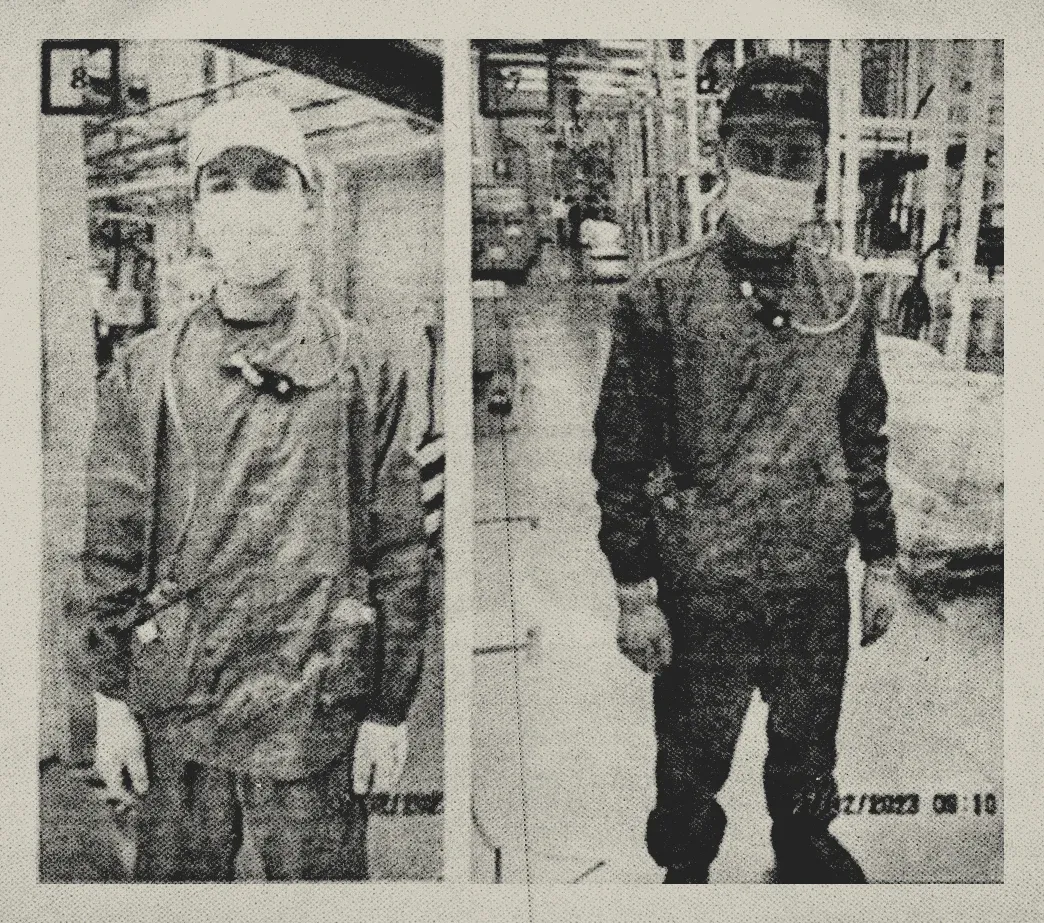
The extent of the air pollution is well illustrated by the fact that Samsung’s records include graphs where the top of the page is at 13 times the limit, so any value exceeding this was depicted with a column 13 units high. Thus, on these charts, the 510-fold exceedance appears only minimally higher than that of a ten-fold one. According to one source, there were other similar measurements showing contamination 500 times or even a thousand times above the limit.
According to the records obtained by Telex, the 510-fold exceedance resulted from the presence of nickel, cobalt, and manganese in the air of the mixing area in amounts far exceeding the limit. According to Samsung's safety report, the nickel-cobalt-manganese powder made from these three materials is a toxic substance that can have fatal effects if released.
According to sources with insight into the matter, the Constitution Protection Office had collected a significant amount of data on the poisonings within Samsung by the end of 2022. The collected telephone conversations, emails, and documents not only proved clearly that the company had occupational safety shortcomings far more serious than previously known, but also that the company's managers did not communicate honestly about these problems.
By early 2023, the Constitution Protection Office, together with the National Information Centre, which assists in government work and decision preparation, had prepared a detailed report on Samsung. In addition to other previously concealed deficiencies, this report contained the data of a series of air quality measurements, and a copy of the document was given to every minister at a cabinet meeting.
To understand subsequent events, it is worth going back to early 2023 and recalling the situation with battery production in Hungary at that time. Samsung began manufacturing batteries in Hungary in 2017, and SK in 2019; however, for a long time, their operations bothered no one except those living near the factories. Furthermore, Samsung was able to increase its production on a scale previously unparalleled in the Hungarian economy, with its value rising from 20 billion forints in 2018 to 1,631 billion by 2022, making the Göd plant the factory with the second-largest revenue in Hungary by then.
While the economies of many European countries, including Germany, could not really emerge from the crisis caused by the coronavirus pandemic, the Hungarian economy produced exemplary growth in both 2021 and 2022. The boom in battery production at the time played a significant role in this, with Samsung and SK constantly hiring and offering outstanding wages to workers.
There was therefore a conviction in the government at that time that the battery industry could be Hungary's breakout point, and that through special support for the sector, the Hungarian economy could make a huge leap within a few years. At the time, everything was being done to bring as many battery plants to the country as possible, and giant factories were announced one after another: SK’s Iváncsa plant in 2021, followed by CATL’s Debrecen factory in 2022.
In early 2023, however, signals reached the government that increasing tension was beginning to develop in several parts of the country due to the battery factories. On January 9, 2023, for example, a packed public hearing was held in Debrecen regarding the CATL investment, which several people disrupted with constant shouting and booing. On January 20, another public hearing was held in the city, attended by hundreds, which dissolved into shouting from the very beginning, followed by accusations of treason and ending in physical altercations.
We understand that recordings from the two Debrecen public hearings reached the Fidesz leadership, where they were quite taken aback that such tension had developed over their plans in a city previously considered a solid Fidesz base. And although the government narrative in the following days was that the scenes at the public hearings were caused by opposition provocateurs, our information suggests that at higher levels of government, the matter was taken much more seriously.
During this period, several opinion polls were conducted on this topic. The 21 Research Center, for example, measured in February that 64 percent of Debrecen residents rejected the CATL investment, while only 19 percent supported it. A March survey by Medián showed that half of Hungarians at the time would have banned the construction of new battery plants, while only 28 percent supported the establishment of new factories. According to the survey, the majority of undecided voters and Mi Hazánk supporters were also in favor of the ban, as were a quarter of Fidesz supporters.
In the first months of 2023, the Cabinet of the Prime Minister, led by Antal Rogán, also ordered several investigations on this topic. We understand that these measurements, similar to the publicly released opinion polls, showed that the vast majority of surveyed voters opposed the construction of battery factories. Our information suggests that decision-makers gathered from the surveys that people primarily fear that battery factories „poison,” for example, by exposing workers and their surroundings to carcinogenic chemicals.
At the same time, however, the foreign ministry was working full steam to bring more battery factories to Hungary. Although several of the world’s largest battery manufacturers had already committed to Hungary by then (Samsung, SK, CATL), Foreign Minister Péter Szijjártó and his team were still intensively negotiating with a series of other manufacturers. Among the largest, Eve Power finally announced officially in May 2023, and Sunwoda in July, that they would build factories in Hungary.
It was in this situation that the ominous cabinet meeting took place, during which the ministers discussed the report on the Samsung factory prepared by the Constitution Protection Office and the National Information Centre. By then, the occupational health and safety authority had already launched its third proceeding against Samsung SDI, and as part of this, they were examining the air quality record from March 9, according to which chemical concentrations in the factory’s notching section exceeded the limit by 275 times.
Although the fact that occupational health and safety authority matters can end up on the government’s table might seem strange at first, it actually isn't: the authority operates within the Pest County Government Office, which is supervised by the government, specifically the Prime Minister's Office led by Gergely Gulyás. (We asked the government office and the Prime Minister's Office about the specific case, but received no responses to our questions. The Pest County Government Office is headed by Richárd Tarnay, who was the Fidesz–KDNP candidate in Budapest’s 8th individual constituency in the April election.)
At the spring 2023 cabinet meeting, the question was whether the government office should suspend the factory’s operation at the end of the proceeding or allow it to continue functioning.
We understand that, in light of the opinion polls conducted on the topic and the report on the poisonings, several ministers argued in favor of closing the factory. Among them was Antal Rogán, who, according to one of our sources, said that „endangering workers to this extent is an unacceptable political risk.” Rogán argued that if Samsung’s poisonings were made public, opponents of battery plants could rightly say the entire industry is dangerous, and protests would ignite across the country, which could cause substantial losses for the governing parties in the 2024 municipal elections.
However, several others at the cabinet meeting argued that it would be a serious mistake to shut down the factory. Our information suggests that among Samsung’s supporters was Péter Szijjártó, responsible for foreign investment, who had long been on confidential terms with several of the factory's managers. Bence Tuzson, the member of parliament for the Göd constituency, also lobbied against the closure at the time, although he was not yet a minister at the time of the spring cabinet meeting.
According to the arguments of those opposing the factory's closure, such an administrative decision would have broken not only Samsung’s confidence in Hungary, but also that of the entire industry. Between 2022 and 2023, the company was still in the midst of building its second factory in Göd, while simultaneously searching intensively for a site for a third European factory. There were several versions for this: according to one, they would have built a factory that produced batteries exclusively for BMW. (BMW eventually reached an agreement with Eve Power instead of Samsung, which is building in Debrecen.)
Samsung weighed several locations for the investment—according to Telex’s information, Czechia and Poland alongside Hungary—and several members of the Hungarian government definitely wanted to ensure they came to Hungary. In one round of negotiations on April 15, 2023, which was ten days after the occupational health and safety authority’s inspection, the Hungarian Investment Promotion Agency (HIPA) proposed Csomád, next to Göd, as a location. Closing the mixing area of the first factory therefore posed a risk that Samsung would not choose Hungary for the site of its third European factory. (This third factory ultimately did not materialize, but instead the second factory has since been significantly expanded—for which the Hungarian government recently provided 133 billion forints in support.)
Those arguing against closing Samsung said that suspending the Göd plant's operation could also scare off other East Asian battery manufacturers looking for European sites. Since no one in the government yet questioned the idea that the Hungarian economy could make a huge leap by supporting battery production, the argument that the loss of investments would cause serious economic damage to the country seemed justified. The case well illustrates the Hungarian government's long-standing economic development dilemma. Essentially, while they might oppose foreign capital and multinational companies on a verbal level or in specific sectors, they attempt to solve economic growth through foreign direct investment and re-industrialization—often at the expense of the health of Hungarian workers or the interests of the local population.
In the spring of 2023, the government ultimately decided against Samsung's temporary closure.
Part III
„Viktor stripped the factory of protection”
South Korea's Samsung SDI began manufacturing batteries in Göd in 2017, and since then the plant has been expanded multiple times. The noise pollution, the chemicals used at the plant, and its employment of foreign workers upset many local residents from the outset. Then, in the 2019 municipal elections, the residents of Göd elected an outspoken critic of Samsung, Csaba Balogh as mayor.
Balogh soon initiated negotiations with Samsung SDI's management, but these were cut short in April 2020, when the government declared the area around the factory a „special economic zone”. This meant that the city no longer had a say in the operation of the plant, and the issue temporarily disappeared from the agenda.
However, more and more troubling information started to emerge about the factory: in November 2021, for example, a young man suffered a fatal accident while at work, and in May 2022, NMP, a toxic solvent used in battery manufacturing was found in the water of local wells. Around the same time, Zsuzsa Bodnár, a journalist at Átlátszó, began filing public interest data requests for the documentation of the official inspections conducted at the Samsung factory, which revealed more and more serious irregularities at the plant.
An Átlátszó article published at the end of 2022 revealed that Samsung had already been fined 17 times for various irregularities, and that on one occasion the company had endangered more than a thousand of its employees. By early 2023, due to the information emerging from the factory in Göd, many voters considered it a fact that battery factories would contaminate their surrounding environment. It later became clear that those who feared that this was the case with Samsung were not wrong: over the years, more and more measurements revealed the presence of pollutants, i.e. compounds used in production in the air, on farmland and in the soil near the plant.
At the time, the president of Samsung SDI in Hungary was Kim Hyun Soo, but several of our sources agreed that the factory in Göd was actually run by Jonhoo Jung, who held the position of vice president.
Officially, the Korean man – referred to in the company only as Mr. Jung – was head of the so-called support section, which covered everything except manufacturing, so he was the one who made decisions regarding licensing and other official matters.
For a long time, Samsung's Korean executives did not take official and regulatory matters seriously enough for the company to have a dedicated public relations director, and the most important consultations outside the company were handled by people whose primary responsibility was entirely different. At the end of 2022, however, Samsung hired two executives who had previously worked in Hungarian diplomacy and in pro-government media. From that point on, they took over handling the company's dealings with the government and its communications.
One of them is László Szabó, the former deputy foreign minister, who has been Samsung's chief advisor since November 2022 and, according to several sources, is the company's primary government liaison. The other is Péter Paplanos, Szabó's long-time assistant, who was hired as PR director in December 2022. Paplanos’s task is to handle the company’s communication and, according to our sources, he also handles lower-level government relations.
The two men's careers have been on parallel paths for decades, having previously worked together in the pharmaceutical industry – at Eli Lilly in the 2000s and at Teva in the 2010s. Szabó was Szijjártó's deputy between 2014 and 2017, and between 2017 and 2020 he served as Hungary's ambassador to the United States, where Paplanos once again followed him as his subordinate.
In April 2020, Szabó became president and CEO of Mediaworks (Hungary’s leading publisher and media group, with more than 100 publications, featuring a strongly pro-government stance) and two months later, Paplanos was appointed director of innovation there. In 2021 and 2022 respectively, they both left Mediaworks and landed at Samsung at the end of 2022, one month apart.
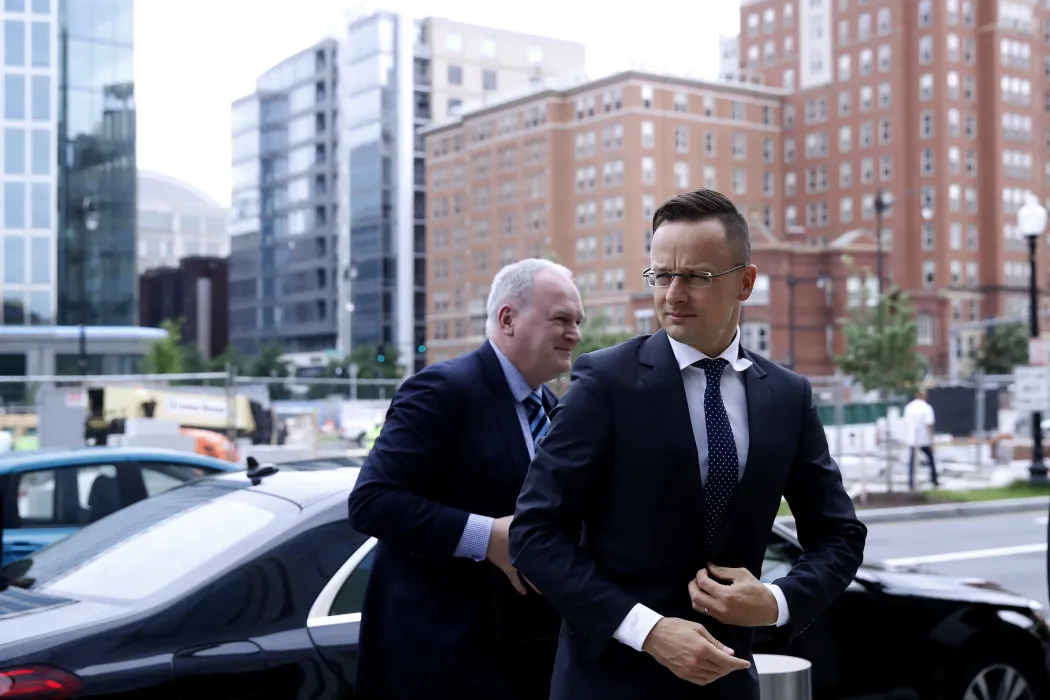
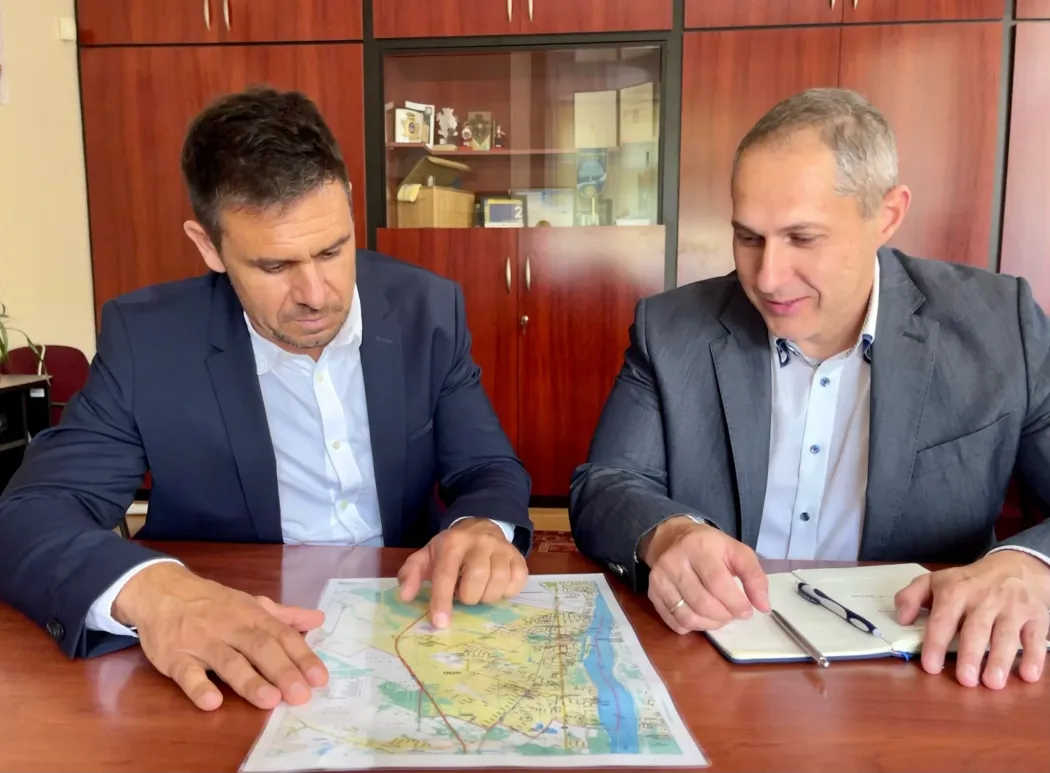
Once a week, Samsung holds management meetings, where managers responsible for various areas of the company discuss current issues. Telex obtained the minutes of several such meetings, which revealed that throughout 2023 and 2024, Szabó regularly spoke with government officials on behalf of the factory, and reported on the outcome of these conversations at these executive meetings. According to several of our sources, he essentially functions as the company’s public relations manager and lobbyist.
Péter Paplanos was hired to serve as the company's PR director at the end of 2022, and since then, all inquiries from the press have been directed to him, only to be consistently left unanswered. We have heard several versions as to why this is the case. According to one, Samsung SDI's South Korean headquarters communicates very little to begin with, and they expect a similar attitude from their Hungarian subsidiary. However, according to some other sources, Paplanos brought this mentality from Mediaworks, and it was he who came up with the strategy that the company would not communicate with any media outlets that were even minimally critical of the government, and would only communicate with the public through the Ministry of Foreign Affairs and Trade and the National Investment Agency. According to several of our sources, Szabó and Paplanos essentially imported the logic and functioning of Fidesz's political institutions to Samsung, meaning that they treat the press and NGOs critical of the company as enemies. As one of our sources explained, Szabó and Paplanos convinced the Korean leadership that Átlátszó and the Göd-ÉRT Association (a local association for environmental protection and urban conservation) were organizations funded from the US, working against Samsung's expansion in Göd because they wanted Samsung to expand in the US instead. (This narrative was later echoed at the state level, with the Sovereignty Protection Office launching an investigation into Átlátszó in 2024 which concluded that the newspaper posed a „sovereignty risk” to „Hungary.”)
According to several sources, Szabó and Paplanos regularly insisted to Samsung's Korean executives that the only reason the press was writing about the company was to attack the government, so there was no need to pay attention to anything published in media outlets critical of the government. We understand that Samsung's Korean headquarters is monitoring the Hungarian press coverage of the factory, but the local management has been able to convince them that all critical papers belong to the „opposition” and should thus be ignored.
During this period, Samsung's management believed that problems related to the irregularities could be smoothed over in time and that they would not lead to any significant government retaliation against the company. According to our sources, this may have been partly due to the fact that these Korean executives were typically given feedback indicating that the problems would be „swept under the rug,” leading them to believe that they could do pretty much anything. This is why, in early 2023, Samsung's Korean management was surprised to learn that the government was seriously investigating the factory's labor safety irregularities and that Samsung could indeed be subjected to sanctions. According to one of our sources, it was announced at a management meeting that the old world, when the company could break the rules without consequences, was over. As he put it, „we were informed that Viktor stripped the factory of protection.”
We have heard several renditions about how this news reached the company. According to one account, after the Occupational Health and Safety Authority imposed the second penalty in February 2023, a government official notified the company that the situation had become serious and that if there was a third violation, the authority's sanction could very well result in a factory closure. Another version says that Samsung's management got word that the Constitution Protection Agency was secretly gathering data on them and was aware that the company's management was keeping some of the problems from the government.
Either way, by March 2023, Samsung's management was extremely alarmed. Our sources indicated that within just a few days, the company had put together a detailed action plan for eliminating the chemical contamination complete with specific deadlines, outlining the steps to be taken and specifying who would be responsible for each task. Telex received both the March and April versions of the action plan, which included detailed technical information. According to one of our sources, the panic at the factory in Göd was so big at that time that they brought in engineers specializing in air purification from the company's South Korean plants. According to the source, industrial air filter equipment was then flown in from Korea at considerable extra cost, which temporarily improved the quality of ventilation at the Göd plant.
Due to the extremely high level (up to several hundred times higher than the legal limit) of exceedances and other problems at the company, a number of Hungarian middle- and senior managers left Samsung in early 2023, three of whom were in executive positions. According to several of our sources, the scenes at the factory at that time could at times be described as dramatic: they recounted that there was a Hungarian middle manager who, upon seeing the results of a measurement indicating severe toxic exposure, informed his Korean boss that he was resigning with immediate effect and began packing up his belongings. His Korean superiors ended up turning him back from the door.
Then, between April 4 and 5, 2023, the Occupational Safety and Health Authority conducted a much longer inspection at the factory than ever before. While previous checks of this kind took only a few hours, this time they spent two full working days at the factory. Once again, the investigation found that Samsung's filtration equipment was not suitable for the effective filtering of very fine, 0.2-0.4 micrometer carcinogenic dust particles generated as a result of the mixing of various chemicals.
The authority's officials clearly documented that Samsung was already aware of this problem in 2021 and had done nothing to resolve it since then. They also identified nine other irregularities, some of which were serious.
At the end of the procedure, which concluded in June, the company would have been fined a total of 20.8 million forints, but since the relevant legislation did not allow for penalties higher than 10 million, this ended up being the final figure.
According to internal documents obtained by Telex, during the first half of 2023, company representatives participated in numerous meetings with representatives of the National Investment Agency, the Ministry of Foreign Affairs and Trade, the Ministry of Energy, the Ministry of Interior, and the Ministry of Economic Development, many times meeting with state secretaries, but sometimes also with ministers. The only source of information about what was said during these talks are the minutes from Samsung's management meetings.
The most clear-cut account of these events comes from a later document, dated 2024, which states that „last April, the high number of poisonings and the extremely poor air pollution data led to very negative feedback from the government and the regulatory authorities. The case of the Samsung plant was brought up at a cabinet meeting, and some influential politicians wanted to have production halted. At the time, we resolved the situation by extensive lobbying and making promises.”
Part IV
When Márton Nagy set his sights on battery factories
At the end of the third occupational health and safety investigation launched in February 2023, Samsung was given until August 31 to remedy the most serious deficiencies. At the same time, they informally notified the company that the same areas would be inspected again in the fall, and if the problems were not resolved by then, battery production in Göd would indeed be suspended. We understand that Samsung made a significant effort that summer to eliminate the long-standing, serious problems, particularly the continuous contamination originating in the mixing area. In the fall, they conducted new air quality measurements, which produced results that were exponentially better than before: although there were still some positive tests, the numbers were nowhere near those from six months before.
Meanwhile, Samsung continued to set new production records into the autumn of 2023 – at one point, more than 200 billion forints worth of batteries were manufactured in Göd in a single month – and they continued to recruit by offering exceptionally high salaries. Although official statistics show that the factory only had around 4,000 employees at the time, we know that, through employment agencies, there were almost 8,000 people actually working there.
At the same time, the subject of the battery industry and battery factories gradually disappeared from the centre stage of Hungarian domestic politics. The election committees did not grant permission for either nationwide or local referendums relating to battery factories, and even though the occasional protest was still organized near the plants, the government judged that the greatest danger had passed. Since opinion polls showed that the vast majority of Hungarians supported the green transition, the government completely removed the word „battery” from its communications during this time and instead began to talk exclusively about the electric car industry and the green industry.
Then, in early 2024, a new problem emerged. While leading up to October 2023, Samsung and SK's factories could barely keep up with the need to expand production, the demand for their products slumped in the last months of the year and then took a nosedive in early 2024. Compared to the peak in October, the output of Hungarian battery factories had fallen by a third in December, and then, in 2024, it continued to decline each month. The decline in the sector's production gave the government particular cause for concern because, after a negative performance in 2023, they were expecting significant economic growth in 2024, but the battery industry's steep decline significantly reduced the already minimal economic growth.
As Direkt36 later reported, in the spring of 2024, there was a heated debate between Márton Nagy and Péter Szijjártó at a government meeting on the subject of battery factories. According to a source cited by the investigative journalism outlet, the Minister of National Economy accused the Minister of Foreign Affairs of having misjudged the transition of the automotive industry and claimed that Hungary had „bet on the wrong horse” by providing significant state support for the battery manufacturing industry. Szijjártó allegedly defended his portfolio and said that the downturn would be followed by another upturn.
Telex was also informed of similar developments. At the time, several of our sources mentioned that when he was appointed minister, Márton Nagy was skeptical about the (Hungarian government’s) Eastern Opening policy and the investments of Asian working capital, but kept quiet about it as long as the battery factories continued to significantly contribute to economic growth. As we understand, he became more critical in 2024, when he saw the crisis in the sector. (Later, at a May 2025 conference of the Hungarian Chamber of Commerce and Industry, Nagy openly stated that the establishment of South Korean and Chinese battery factories in Hungary had not reduced but had instead increased the Hungarian economy's dependence on Germany.)
Meanwhile, the balance of power within the government slowly began to shift. Márton Nagy, the former Minister of Economic Development was promoted to Minister of National Economy at the beginning of 2024, initially only taking over the competences of the former Ministry of Finance, but over time, a number of other areas were also transferred to him from the Ministries of Defense, Justice, Agriculture, and Foreign Affairs. According to a 2024 article by Direkt36, Nagy was aggressively seeking to expand his influence within the government at the time, and tried to take over more and more areas from his fellow ministers. Telex was told that Nagy actually wanted to go much further than what was ultimately achieved and was looking to completely push Szijjártó out from economy-related matters. In practice, this would have meant that the National Investment Agency, responsible for foreign corporate investments, would have been transferred from the Ministry of Foreign Affairs and Trade to the Ministry of National Economy, and the word „foreign” would have been removed from its name.
While this did not happen, to our knowledge, Márton Nagy gained more and more influence over economic policy in 2024, and with it, over the control of battery factories. The strengthening of Nagy's informal role is also evidenced by the fact that while the 2023 Samsung documents leaked to Telex do not mention Márton Nagy's ministry very often, the 2024 documents do so more frequently.
In February 2024, a month and a half after Nagy was appointed Minister of National Economy, on the initiative of the new ministry, the maximum amount of penalties for occupational safety violations was raised from 10 million to 100 million forints.
Although in theory, this applies to all sectors, a source with insight into the decision-making process at the time indicated that this was done specifically because of the battery industry, and more specifically because of the blatant irregularities at Samsung and a few other Korean companies.
The fact that some in the government had lost confidence in the National Investment Agency, which is under Szijjártó's authority, is well illustrated by the fact that around this time, the State Audit Office began examining the basis on which government decisions awarding special funding were made, and then, in its spring 2025 analysis, announced that it had identified serious shortcomings in this area. This was followed by two rounds of thorough revisions to the rules on subsidies that could be granted to foreign companies through individual government decisions.
The gist of these complex changes was that instead of encouraging low-value-added manufacturing, Hungary should instead seek to attract higher-value-added processes, such as research and development investments, by offering state incentives. Some sources claim that the new rules were deliberately devised by Márton Nagy and his colleagues specifically to filter out the battery factories which Szijjártó continued to favor.
Márton Nagy's growing influence is demonstrated by the fact that in the fall of 2024, it was he who met with the Chinese Minister of Industry to discuss the recycling of batteries. And last summer, the government tasked the Ministry of National Economy with establishing a supervisory authority for the battery industry, which would monitor manufacturers setting up in Hungary. This has not yet been established.
The government's concerns about the battery industry were somewhat alleviated by the fact that in most municipalities with battery factories, the Fidesz mayors who supported these investments were re-elected in the 2024 local elections. Viktor Orbán, who had remained silent on the subject for a long time and even avoided mentioning the word „battery” in his 2024 State of the Nation Address, reaffirmed his support for the sector in parliament in early 2025, when he said that he had no doubt that those who invest in the battery industry were the ones who would win in the future.
Then, in the spring of 2025, Sweden's Northvolt went bankrupt. This was the company that Western Europeans had hoped would compete with the Chinese and Korean companies, some of which operate or are building factories in Hungary. In an interview with Economix last fall, referencing Northvolt's bankruptcy, Orbán said that by providing significant support for battery manufacturing, „Minister Szijjártó hit the jackpot. Bingo, or whatever the correct term is. He hit the jackpot.” This is likely to prove true in the sense that by now, five of the world's ten largest battery manufacturers have factories in Hungary, and some of these are bound to be successful in the long run.
They didn’t advertise it, but still gave a 133 billion-forint handout
According to documents obtained by Telex, after the improvement at the end of 2023, the results of air quality measurements at Samsung's factory in Göd worsened again at the beginning of 2024. These measurements again showed relatively high concentrations that exceeded the threshold values, although they were nowhere near as bad as those recorded in early 2023. According to one of the documents, at that time, Samsung decided that „an explanation must be found” for the poor results, and it appears that they succeeded, because there were no occupational health and safety proceedings initiated against the company that would have resulted in penalties.
Almost a year went by before the next procedure of this kind was launched. The occupational health and safety inspection conducted in the first half of 2025 revealed seven irregularities, including a failure by Samsung to carry out mandatory biological testing for carcinogenic nickel and cobalt on dozens of its employees, according to Átlátszó, which requested the minutes at the time. Samsung was again fined the maximum health and safety penalty of 100 million forints, and in September they were fined another 12 million forints. These cases received almost no coverage at the time, with the latter not even being reported in the newspapers.
A good illustration of the relationship between the government and Samsung is the fact that in the spring of 2024, the court suspended the factory's environmental permit, but then reissued it in the fall, only to completely revoke it in the fall of 2025 – without ever suspending the plant's operations during this time. The government agency overseeing the factory took no action in the matter, while the government has consistently insisted that the factory is allowed to operate at reduced capacity without a permit – even though it has never specified the extent to which capacity should be reduced, nor how Samsung has achieved this.
Meanwhile, at the end of 2023, Samsung began the expansion of its second factory unit, which is expected to mainly produce batteries for Hyundai cars. According to documents obtained by Telex, in 2023, during the negotiations between the government and Samsung, it was agreed that the state would provide HUF 133 billion to support the expansion, in exchange for which Samsung would create 1,900 new jobs. The decision on the subsidy was finally announced two years later – last fall – but the creation of 1,900 new jobs was not included in the agreement.
Meanwhile, Samsung's turnover from battery production has been declining from quarter to quarter, even as it has been accumulating increasingly serious losses. The Göd plant was already in the red last year, laying off more and more people every month. We understand that at the end of last year, an additional 800 contracted workers were laid off on top of the previous ones.
—
Before publishing our article, we sent questions to the Constitution Protection Office concerning the secret data collection on Samsung, but we did not receive a response.
We contacted the Prime Minister's Office, led by Antal Rogán, with questions about the 2023 government meeting, Rogán's position on the issue, as well as the role of the Constitution Protection Office, but received no response.
We contacted the Ministry of Foreign Affairs and Trade with questions about the negotiations between Péter Szijjártó and Samsung, the relationship between Szijjártó and László Szabó, and the infamous government meeting, but received no response.
We contacted the Ministry of Justice in connection with the negotiations between Samsung and Bence Tuzson, but received no response.
We contacted the Ministry of National Economy in connection with the claims concerning Márton Nagy mentioned in the article, but they did not respond to any of our questions.
We contacted the Pest County Government Office with questions about the third procedure of the occupational health and safety authority against Samsung in 2023, but received no response.
We contacted Samsung SDI about air measurements, the cases of poisoning inside the factory, lobbying activities, and the roles of Péter Paplanos and László Szabó, but we did not receive a response.